Why Your Bread Fails and How to Fix It

Baking transforms simple ingredients into something magical. Unlike cooking, where instinct and improvisation often lead to delicious results, baking rewards precision, understanding, and patience. This comprehensive guide explores the science behind baking, the essential techniques every home baker should master, and the troubleshooting knowledge that turns failures into learning experiences.

The Science of Baking: Why Precision Matters

Why Your Bread Fails and How to Fix It

Baking is applied chemistry. Every ingredient plays a specific role, and their interactions create the textures and flavors we love. Understanding these functions transforms you from a recipe follower into a confident baker.

Flour provides structure through two proteins, glutenin and gliadin, that combine with water to form gluten. This elastic network traps gas bubbles, allowing baked goods to rise and hold their shape. Different flours contain different protein levels: bread flour has more (12-14%) for chewy loaves, while cake flour has less (7-9%) for tender crumbs. All-purpose flour falls in between, making it versatile for most applications.

Leavening agents create the air that makes baked goods rise. Chemical leaveners like baking soda and baking powder produce carbon dioxide through acid-base reactions. Baking soda requires an acidic ingredient to activate. Baking powder contains both acid and base, reacting when moistened and again when heated. Yeast is a living organism that ferments sugars, producing carbon dioxide and alcohol—the latter evaporates during baking, leaving behind complex flavors.

Sugar does far more than sweeten. It tenderizes by interfering with gluten formation, helps baked goods brown through caramelization and Maillard reactions, retains moisture for longer shelf life, and provides food for yeast in bread baking. Reducing sugar in a recipe affects structure and texture, not just taste.

Fat tenderizes by coating flour proteins and preventing gluten development. It also adds richness, helps trap air during creaming, and affects spread in cookies. Butter contributes flavor and creates flaky layers in pastry, while oil creates moist, dense textures and allows batters to mix without separating.

Eggs bind ingredients together, add moisture and richness, provide structure through protein coagulation, and help with leavening when beaten. Egg yolks add fat and emulsifying properties, while whites contribute protein and can be whipped into foam for additional lift.

Essential Equipment for the Home Baker

The right tools make baking easier and more enjoyable. While professional bakeries require specialized equipment, home bakers can accomplish impressive results with modest setups.

A kitchen scale is the single most important baking investment. Measuring flour by volume is notoriously inaccurate—the same cup can contain wildly different amounts depending on how flour was scooped. Weight measurements ensure consistency and are used in professional recipes worldwide. Look for a scale that measures in grams with at least 0.1g precision.

Quality mixing bowls in various sizes accommodate different tasks. Stainless steel is durable and non-reactive. Glass allows you to see ingredients and works well for proofing dough. Have at least three sizes: small for whisking eggs or mixing glazes, medium for most recipes, and large for bread doughs that need room to rise.

A stand mixer is a worthy investment for serious bakers. It handles heavy doughs, whips egg whites and cream to perfect peaks, and frees your hands for other tasks. Hand mixers work well for lighter batters but struggle with stiff cookie doughs or bread. For occasional bakers, a hand mixer plus good arm strength can substitute.

Baking pans in various sizes expand your repertoire. Start with 9-inch round cake pans (at least two for layer cakes), a 9×13-inch baking pan, a muffin tin, and at least two sturdy sheet pans. Add specialty pans as interests develop: springform pans for cheesecakes, loaf pans for bread, tart pans for elegant desserts.

An oven thermometer is essential because most home ovens are inaccurate. A thermometer reveals your oven’s true temperature, allowing you to adjust settings accordingly. Proper temperature directly affects how baked goods rise, brown, and set.

Measuring Ingredients Correctly

Accurate measurement is where baking precision begins. Different ingredients require different techniques.

For dry ingredients measured by volume, use the “spoon and level” method: spoon flour into a measuring cup until overflowing, then level with a straight edge. Never scoop directly from the container or tap the cup, which compacts flour and leads to excess. Brown sugar is the exception—pack it firmly into the cup.

For liquid ingredients, use clear measuring cups with pour spouts. Set the cup on a flat surface and read at eye level to ensure accuracy. For sticky liquids like honey, coat the measure with oil first so the ingredient slides out completely.

Weight measurement eliminates these concerns entirely. One hundred grams of flour is always one hundred grams, regardless of how it’s placed on the scale. As you become more comfortable with baking, transitioning to weight-based recipes improves consistency dramatically.

Small quantities of leavening, salt, and spices require measuring spoons. Level off with a straight edge for accuracy. These small amounts matter: too much baking powder causes bitter taste and collapsed structure; too little salt leaves baked goods flat and bland.

Understanding Oven Behavior

Your oven is the final step in the baking process, and understanding its behavior improves results significantly.

Always preheat thoroughly. Most ovens take 20-30 minutes to reach stable temperature, even after the preheat indicator suggests readiness. For bread and pastry, adequate preheating is crucial for proper rise and crust development.

Hot spots are common in home ovens. Some areas run hotter than others, causing uneven browning. Learn your oven’s patterns by baking a pan of biscuits and observing which brown faster. Rotate pans midway through baking to compensate, or use the oven’s convection setting if available for more even heat distribution.

Rack position affects results. Most baking happens in the center of the oven, where heat is most even. Lower racks produce browner bottoms (good for crusty bread), while upper racks promote top browning. For delicate items like macarons, using two racks with pans rotated halfway through works well.

Opening the oven door releases heat and can cause delicate items to collapse. Avoid checking until near the minimum baking time stated in recipes. Use the oven light and window to monitor progress instead.

Mastering Basic Techniques

Several fundamental techniques appear across countless recipes. Mastering these skills opens up the entire world of baking.

Creaming butter and sugar creates the foundation for many cakes and cookies. Start with softened butter (65-70°F), add sugar, and beat at medium-high speed until pale and fluffy—usually 3-5 minutes. This process incorporates air cells that expand during baking, creating light texture. The butter should feel like cool cream cheese; too soft and it won’t hold air, too cold and it won’t cream properly.

Folding incorporates delicate ingredients without deflating them. Cut down through the center of the mixture with a rubber spatula, sweep along the bottom of the bowl, and fold up and over. Rotate the bowl and repeat until just combined. This technique appears when adding flour to cake batter or incorporating whipped egg whites into soufflé base.

Whisking egg whites to stiff peaks requires clean equipment—any fat prevents whites from whipping properly. Begin at low speed to break up whites, increase to medium-high, and continue until peaks stand straight when the whisk is lifted. Over-whipping creates dry, grainy whites that don’t fold smoothly.

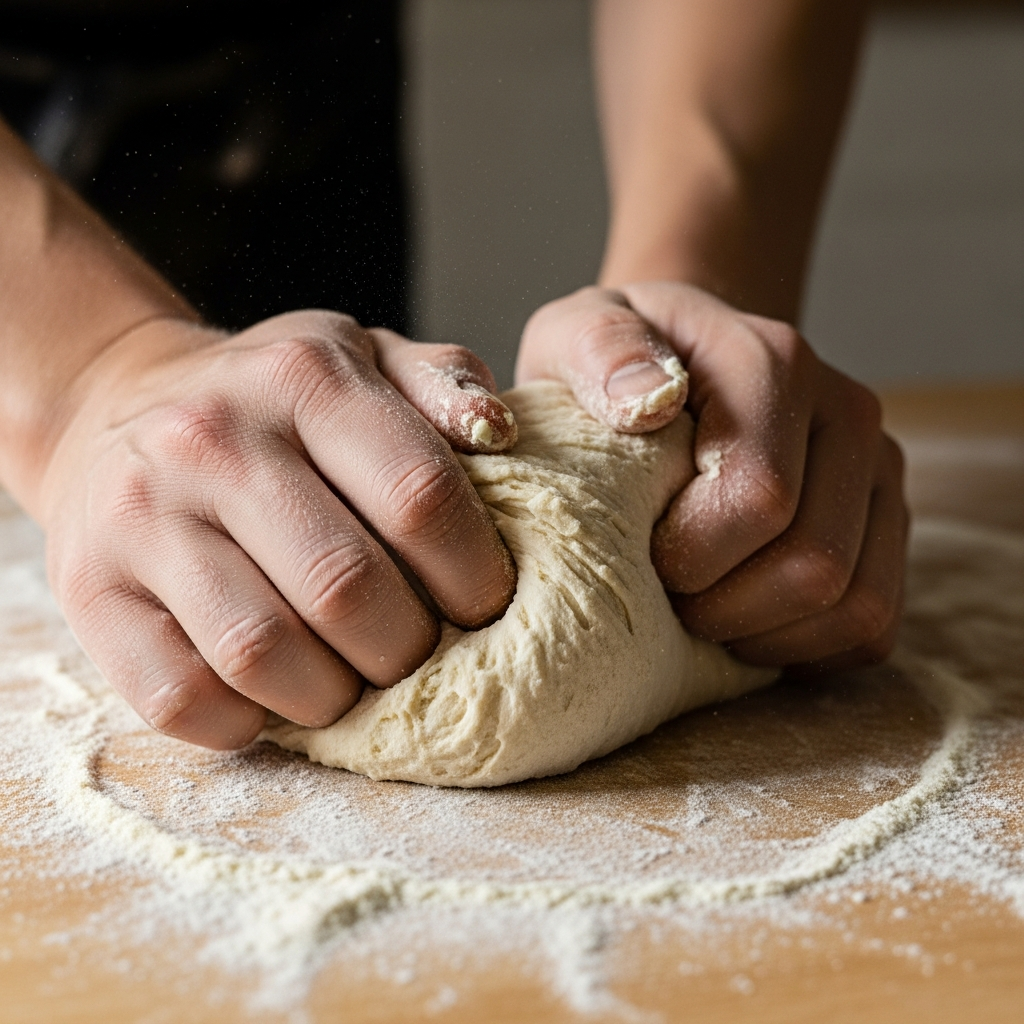
Kneading develops gluten in bread doughs. Push the dough away with the heel of your hand, fold it back, rotate, and repeat. Well-kneaded dough becomes smooth, elastic, and passes the “windowpane test”—stretched thin enough to see light through without tearing. Most doughs require 8-12 minutes of hand kneading or 5-8 minutes in a stand mixer.

Proofing allows yeast doughs to rise. The ideal environment is warm (75-80°F) and humid. Cover dough with plastic wrap or a damp towel to prevent drying. First rise (bulk fermentation) usually doubles volume; second rise (proofing) after shaping typically increases volume by 50-75%. Under-proofed bread is dense; over-proofed bread has weak structure and may collapse.

Cookies: Getting Them Right Every Time

Cookies are an excellent entry point to baking because they’re forgiving, quick, and infinitely variable. Understanding what affects their texture helps you achieve your preferred style.

Butter temperature dramatically affects spread. Cold butter creates thick, cakey cookies because the butter melts slowly during baking. Room temperature butter creamed with sugar produces chewy cookies with moderate spread. Melted butter creates thin, crisp cookies with maximum spread. Choose based on your preferred style.

Sugar ratios influence texture too. More brown sugar relative to white creates chewier cookies because brown sugar contains more moisture and acid. All white sugar produces crispier results. Reducing sugar overall creates drier, more crumbly cookies.

Chilling dough before baking controls spread. Cold dough holds its shape longer in the oven, resulting in thicker cookies. This step is essential for cutout cookies that need to maintain their shapes. For other cookies, chilling for at least an hour improves texture and allows flavors to develop.

Avoid over-baking. Cookies continue cooking after removal from the oven due to residual heat in the pan. Pull them when edges are set but centers appear slightly underdone. Let them cool on the pan for a few minutes before transferring to a rack.

Cakes: Building Layers of Flavor and Texture

Beautiful cakes combine proper mixing technique, careful baking, and attention to detail. Each step builds toward the final result.

Room temperature ingredients incorporate better. Cold eggs can cause butter to seize and create lumpy batter. Cold milk shocks batter and affects rise. Set ingredients out 1-2 hours before beginning, or warm eggs in warm water and microwave milk briefly if you forget.

Don’t over-mix once flour is added. Excessive mixing develops gluten, creating tough, rubbery cakes. Mix just until flour disappears, then stop. Some small lumps are acceptable and better than over-mixing.

Level your cake layers for professional results. Most cakes dome in the center during baking. A long serrated knife cuts domes off for flat layers that stack evenly. Save the trimmings for trifle or crumbled toppings.

Apply a crumb coat before final frosting. This thin layer of frosting seals in crumbs, preventing them from appearing in the finished surface. Chill until firm, then apply the final layer for a smooth, professional look.

Bread: The Art and Science of Fermentation

Bread baking connects us to thousands of years of culinary tradition. Despite its simple ingredients—flour, water, salt, yeast—good bread requires understanding and practice.

Hydration (the ratio of water to flour) affects everything. Higher hydration creates open, irregular crumb with large holes. Lower hydration produces tighter, more uniform texture. Start with recipes around 65% hydration for manageable doughs, increasing as your skills develop.

Time develops flavor. Long, slow fermentation allows enzymes to break down starches into sugars and creates complex flavor compounds. Retarding dough in the refrigerator overnight produces superior flavor compared to quick room-temperature rises.

Steam in the early baking phase allows maximum rise before crust sets. Professional ovens have steam injection; home bakers can add a pan of water to the oven or spray loaves before baking. The steam keeps the surface flexible, allowing the bread to expand fully.

Internal temperature indicates doneness more reliably than color or hollow sounds. Most breads are fully baked at 190-210°F internal temperature. Lean breads like baguettes should reach the higher end for fully set structure; enriched breads with eggs and butter can come out at lower temperatures.

Troubleshooting Common Problems

Every baker encounters failures. Learning to diagnose and correct problems accelerates improvement.

Dense, heavy cakes usually result from expired leavening, over-mixing, or oven temperature too low for proper rise. Check leavening freshness before baking: baking powder should bubble when mixed with warm water; baking soda should fizz when mixed with vinegar.

Sunken centers indicate the interior wasn’t set before removing from the oven, often from opening the door too early or oven too cool. It can also mean too much leavening, which causes rapid rise followed by collapse.

Tough cookies result from over-mixing, too much flour, or over-baking. Measure flour carefully using the spoon-and-level method, mix just until dough forms, and pull from the oven while centers still look slightly soft.

Dense bread with tight crumb usually means under-proofing (the dough didn’t rise enough), under-kneading (gluten wasn’t developed sufficiently), or too much flour (dough was too stiff to expand).

Conclusion: Embracing the Journey

Baking excellence comes through practice and attention. Every batch teaches something, whether that’s a perfect technique worth repeating or a mistake to avoid. Keep notes on what works and what doesn’t. Don’t be discouraged by failures—professional bakers experience them too. The combination of science and art in baking rewards those who approach it with curiosity and patience. Start with simple recipes, master the fundamentals, then gradually tackle more challenging projects. The satisfaction of creating something delicious from simple ingredients never diminishes, no matter how experienced you become.

Marcus Chen

Marcus Chen

Author & Expert

Marcus covers smart trainers, power meters, and indoor cycling technology. Former triathlete turned tech journalist with 8 years in the cycling industry.

1 Articles
View All Posts

Subscribe for Updates

Get the latest articles delivered to your inbox.