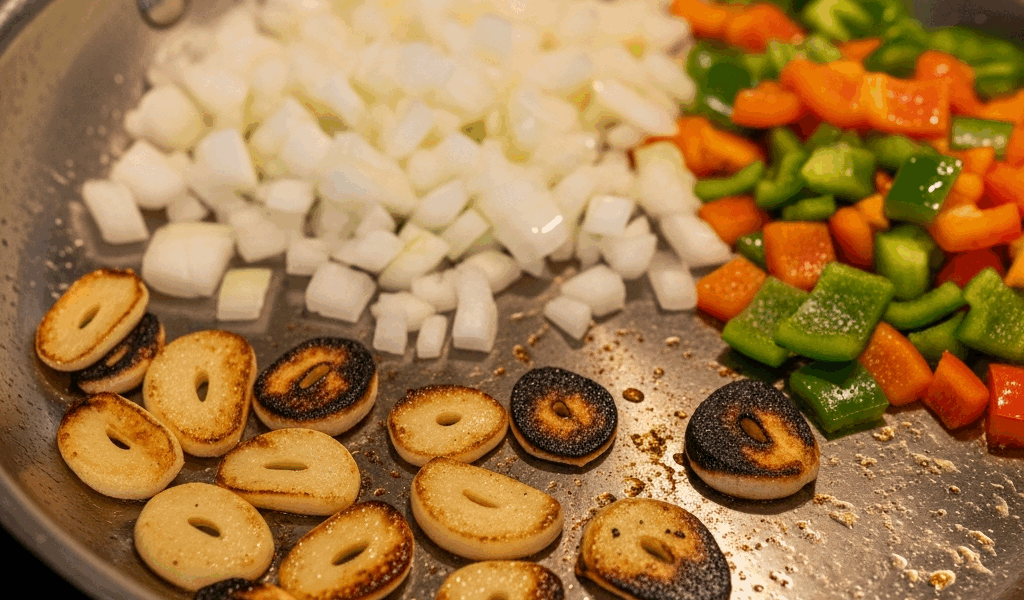
What Actually Makes Garlic Burn So Fast
Cooking with garlic has changed with all the conflicting advice flying around. “High heat is fine.” “Always use low heat.” “Add it early.” “Add it last.” Everyone has an opinion, and most of them will get you a bitter, acrid pan of regret.
This article includes affiliate links. We may earn a commission at no extra cost to you.
Probably should have opened with this section, honestly. But knowing why garlic burns the way it does changes how you think about every fix on this list.
So here’s the deal: garlic cloves contain roughly 28% sugar by dry weight. That’s significantly higher than onions, which sit somewhere around 5-9%. At the same time, garlic holds far less water than onions— which means those sugars are concentrated, exposed, and basically primed to react the second heat enters the equation.
When garlic hits a hot pan, those sugars trigger the Maillard reaction almost immediately. That’s the browning process responsible for the smell that makes your neighbors knock on your door. But what is the Maillard reaction, really? In essence, it’s a chemical reaction between amino acids and sugars that creates flavor compounds and brown color. But it’s much more than that— it’s also a timer, and garlic’s timer runs fast.
Onions get maybe five minutes of forgiveness. Garlic gets 90 seconds, tops. Once it crosses into dark brown territory, the bitterness compounds fast— and no amount of additional cooking erases it. That’s what makes garlic so and so absolutely unforgiving when we’re distracted.
The Timing Mistake Most Home Cooks Make
The error is almost always identical: garlic goes into the pan at the same moment as the onions. Onions need 4-6 minutes to soften and turn sweet. Garlic needs 90 seconds. Add them together and you’re burning garlic while the onions are still raw and sharp.
Don’t make my mistake. I spent an embarrassing stretch of time thinking my stove ran hot, that something was wrong with my pan, that maybe I was buying bad garlic. None of that was the problem. The problem was timing— pure and simple.
The secondary error is adding garlic to a pan that’s already screaming. You’ve been sautéing onions over medium-high heat, the oil is shimmering aggressively, and the thought arrives: “Time for garlic.” It’s not. That pan is too hot. Garlic doesn’t survive that environment— it browns in the time it takes you to reach for your spoon.
Real scenario: pasta sauce. You start with onions in hot olive oil, they’re cooking beautifully, and you add minced garlic directly into that same high heat. Thirty seconds of sizzle. Then it’s bitter, and your entire sauce tastes harsh from that point forward— there’s no coming back from it.
Before garlic goes in, hold your hand about six inches above the pan. Should feel warm. Hot, but not painful. You should be able to hold it there for a few seconds without yanking it away. If the oil is visibly shimmering like heat rising off summer pavement, you’ve already overshot the window.
How to Add Garlic at the Right Moment by Dish Type
Sautéed Dishes and Stir-Fries
Cook your base aromatics first— onions, celery, peppers— over medium or medium-high heat until they’re softened. That’s roughly 3-5 minutes. Then lower the heat to medium-low, wait about 15-20 seconds for the pan temperature to drop slightly, and add the garlic.
You’ll know the timing is right when you smell the sharp, fresh garlic aroma within 30 seconds— not acrid, not burnt, just clean and pungent. Cook for 60-90 seconds until it’s light golden and fragrant, then immediately introduce the next ingredient— vegetables, protein, sauce, whatever comes next. The smell will shift from sharp to sweet and toasted. That’s your cue. Move on.
Tomato-Based Sauces
Tomato sauces are the most forgiving category here, because the acid and moisture create a natural buffer. Cook your onion base for 3-4 minutes over medium heat until translucent, then reduce to medium-low. Add garlic and cook 45-90 seconds— just barely golden, not brown— then immediately add tomatoes. Canned, fresh, paste mixed with stock— doesn’t matter. The liquid stops the cooking and protects what you’ve built.
One specific note: if you’re using tomato paste, let it cook in the oil for 1-2 minutes before adding garlic. Paste browns fast and can mask the visual cues that tell you garlic is done.
Oil-Based Sauces Like Aglio e Olio
This is where garlic is the entire point of the dish— and where most people panic and overcook it. Heat your olive oil over low to medium-low heat. Add garlic slices or minced garlic directly to the cold or barely-warm oil. Yes, cold oil. Let it cook slowly for 3-5 minutes, stirring occasionally. You’re infusing the oil, not racing a clock.
The garlic should turn pale golden— almost cream-colored, like the inside of a roasted hazelnut. Once it reaches that stage and the smell is deeply, clearly garlicky, pull the pan from heat. This method works because you control temperature from the very start. No sudden spikes. No rushing.
Stir-Fries Specifically
Stir-fries demand speed, so garlic timing becomes even more critical here. Prep everything before the pan touches heat— vegetables cut and ready, garlic minced, sauce measured and mixed. Heat your wok or pan over high heat with oil until it just barely smokes.
Add aromatics like ginger or the white parts of scallions first— they’re more forgiving at high heat. Count to 15 seconds. Then add garlic. You have maybe 45-60 seconds before it browns. The moment the smell shifts from sharp to toasted, add your vegetable or protein immediately. Don’t hesitate. Residual heat will finish the garlic anyway.
Heat Level and Pan Choice Make a Bigger Difference Than You Think
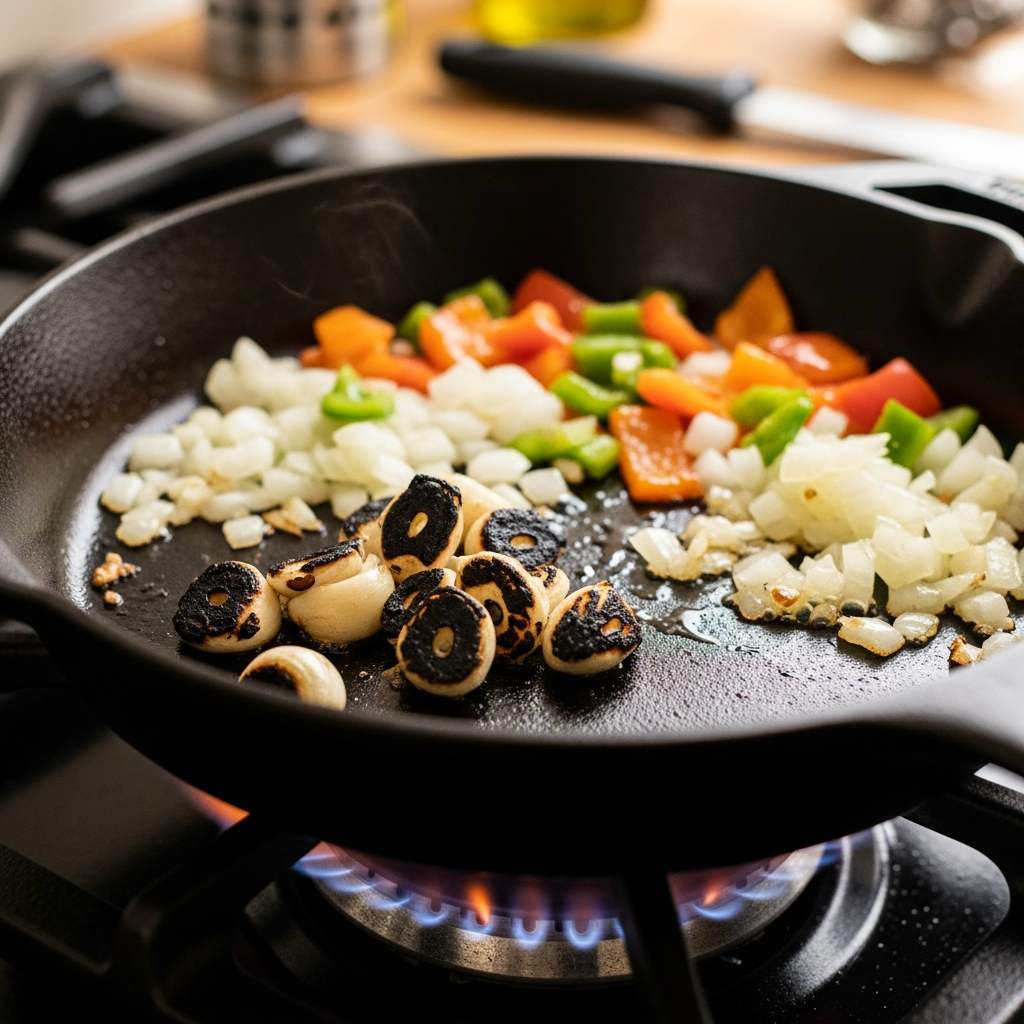
Cast iron holds heat relentlessly. I’m apparently a cast iron obsessive— a vintage Lodge 12-Inch Cast Iron Skillet works for me while nonstick pans never feel quite right— but cast iron absolutely scorches garlic faster because the pan radiates stored heat even after you lower the flame. It doesn’t respond to temperature adjustments the way stainless does.
Stainless steel cools faster when you reduce heat, giving you slightly more margin. Nonstick is gentler overall— less conductive surface, less dramatic temperature swings. Medium heat is almost always the right call when garlic is involved. Medium-low if you’re adding it early to cold or cool oil. Medium-high only if you’re adding it to an already-cooking base and immediately following it with liquid.
Oil choice matters too. Olive oil— standard extra-virgin, usually around $8-12 for a 500ml bottle— has a lower smoke point than vegetable or peanut oil, so it browns faster and can amplify the illusion that garlic is cooking too quickly. Butter burns at an even lower temperature. Combine a cast iron pan, butter, and high heat with garlic, and you’re essentially guaranteeing char. Every single time.
What to Do If Your Garlic Already Tastes Bitter
Mild bitterness can sometimes be masked. A pinch of sugar— about 1/4 teaspoon for a small sauce— can help. So can a splash of acid like lemon juice or white wine vinegar, or a knob of butter or a spoonful of cream stirred in at the end.
But if the bitterness is deep and obvious? That garlic is genuinely scorched. Masking won’t save it. You need to start the aromatics base over— discard the burnt material, wipe the pan clean, and begin again with lower heat.
It’s frustrating. This happened to me last month making a risotto base. I added garlic too early into oil that was still too hot, got distracted by my phone for maybe 45 seconds, and that was it. Bitter, dark, done. I restarted. Took an extra five minutes. The finished risotto tasted clean and bright instead of harsh and acrid— completely worth the reset.
You already know what garlic smells like when it’s exactly right. That sharp-to-sweet shift, that warm toasted aroma— you’ve experienced it before. Trust that instinct. Now that you know the chemistry behind it, the next time you cook with garlic, you won’t burn it.


Stay in the loop
Get the latest home cuisine delights updates delivered to your inbox.