The Real Reason Your Rice Keeps Going Mushy
Rice has changed with all the contradictory advice flying around. Two cups of water per cup of rice. No, one and a half. Rinse it. Never rinse it. Keep the lid on. Vent the lid. I spent two years convinced my problem was cooking time— turns out I was losing three separate battles at once and didn’t even know it.
So here’s what the generic tutorials skip right past: mushy rice almost never comes down to how long it sits on the heat. The damage starts before the rice ever touches the pot. It accelerates the second you lift that lid. Most advice just hands you a water ratio like it’s some kind of universal cure and calls it a day.
The three actual culprits? Too much water. Skipping the rinse. Opening the pot too early. Those are it. But here’s the wrinkle— jasmine, basmati, short-grain arborio— they each respond differently to every one of those mistakes. That’s why your brother-in-law’s foolproof method falls apart completely in your kitchen. That’s what makes rice so endlessly frustrating to us home cooks.
So, without further ado, let’s figure out exactly which mistake you’re making and how to stop making it.
This article includes affiliate links. We may earn a commission at no extra cost to you.
How to Diagnose Which Mistake You Actually Made
Look at your rice right now. Seriously, just look at it.
Every grain soft and clumping into a paste? You drowned it. The starches swelled past their structural limit and the grains basically merged. Most common problem I see— points directly at a water ratio that’s too high.
Top layer wet and gluey but the bottom has real texture? Your lid came up too early. Maybe once, maybe several times. Steam escaped, the top grains starved for moisture while the bottom ones cooked normally. You’ve created a gradient where there shouldn’t be one.
Wet on top but somehow crunchy underneath? That’s a heat problem layered on top of everything else. High heat at the finish crisped the bottom while the top stayed damp and sad.
Grains falling apart individually, tasting starchy and bland? You either skipped rinsing or— and this one surprises people— your rice has been sitting in that bag for years. Old rice cooks differently. The starches have already begun breaking down before you even touched them. Don’t make my mistake of blaming technique when the ingredient itself was the problem.
Got a match? Good. Now you know what you’re actually fighting.
Fix It Before It Happens— Water Ratios That Hold Up in Practice
Probably should have opened with this section, honestly.
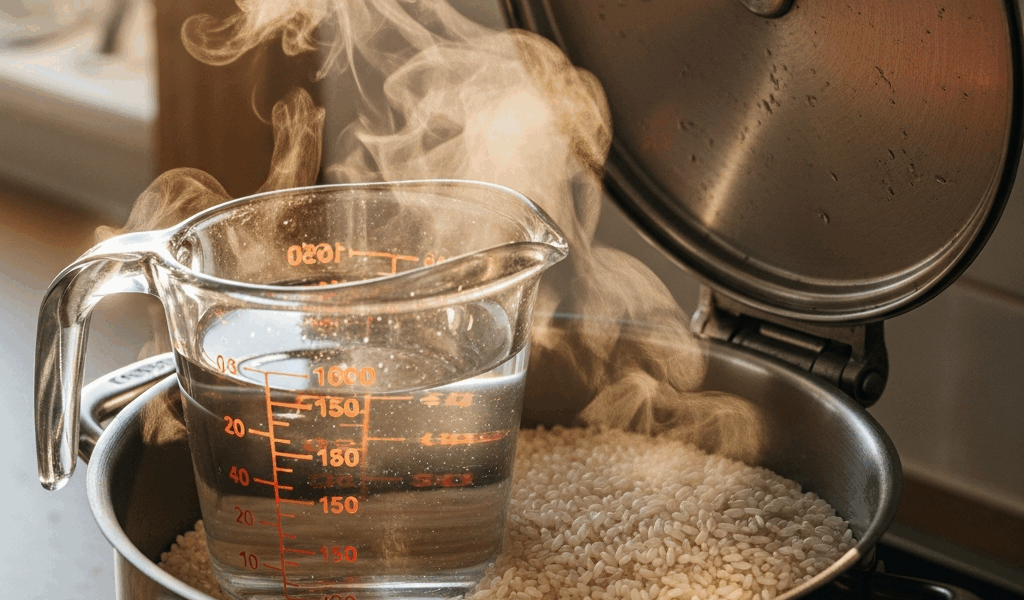
The 2:1 ratio printed on most bags— two cups water to one cup rice— is a manufacturer’s starting point. It’s also calibrated specifically for white long-grain rice cooked absorption-style, meaning the water stays in the pot and gets fully absorbed. Different rice needs different numbers. The bag doesn’t care about your specific rice variety.
White long-grain rice: 1¾ cups water per cup of rice. Not the full 2 cups. Lower than the bag says, and it works better.
Jasmine rice: 1⅔ cups water per cup of rice. Jasmine is thinner, more delicate. It absorbs faster than you’d expect.
Basmati rice: 1½ cups water per cup of rice. Those long grains separate easily— excess water just tears them apart.
Short-grain or arborio: 2 cups water per cup of rice, or higher if you’re going for risotto territory. These starchy grains genuinely need the moisture.
I’m apparently a chronic over-waterer and the lower ratios work for me while the bag instructions never once produced rice I was proud of. These ratios assume absorption method— lid on, covered the whole time.
But what is the pasta method? In essence, it’s boiling rice in a large excess of water like you’re making spaghetti, then draining off what’s left. But it’s much more than just a backup plan— it essentially removes the water ratio problem from the equation entirely. You just sacrifice some nutrients in the drain water. Worth knowing about.
Why does the bag’s number fail? Manufacturers build in margin for elevation, hard water, cheap lids. They overestimate on purpose. Trust the lower numbers. You can always add a splash of water if grains are still firm, but you absolutely cannot remove water once it’s been absorbed.
The Rinse and Rest Steps Most Cooks Skip Completely
Rinsing removes starch dust from the surface of each grain. That dust is exactly what becomes the glue binding everything into mush.
Use a fine-mesh strainer— the OXO Good Grips 8-Inch Strainer runs about $12 and it’s what I’ve used for years. Run cold water over the rice for roughly 30 seconds, stirring gently with your fingers. The water starts cloudy. You’re waiting for it to go nearly clear. That’s your signal. You’re not trying to strip out all starch— some stays inside the grain for structure— just the loose powder coating the exterior.
After rinsing, let the rice sit in the strainer for a full minute. Shake it gently. Surface water left on the grains adds to your cooking water and quietly throws off every ratio you just carefully measured.
Now cook absorption-style. Here’s the part that gets skipped constantly: when the timer goes off and the water is gone, the rice isn’t finished. Turn off the heat— leave the lid completely alone— and wait 10 minutes. Residual steam continues cooking the grains gently while moisture redistributes evenly through each one. No added liquid, no added heat. Grains plump evenly instead of going soft on the outside while staying chalky inside.
After 10 minutes, a fork. Fluff gently. If everything else went right, you’ll have exactly what you wanted— grains that are separate, tender, and actually taste like something.
How to Rescue Mushy Rice Right Now
Already standing in front of a pot of mush? Some rescues work. Some don’t.
Spreading it across a rimmed baking sheet— something like a standard half-sheet pan— and running it in a 300°F oven for 10 to 15 minutes will firm the texture up slightly. Not back to perfect, but you recover some structure. Works best while the mush is still fresh and hot. Cold, congealed leftovers won’t improve much in the oven.
Fried rice is your actual save here. Mushy rice performs perfectly in fried rice— you’re breaking the grains apart anyway, and high heat evaporates the excess moisture fast. Day-old mushy rice hit with eggs, a couple tablespoons of soy sauce, and a cup of frozen peas or mixed vegetables comes out tasting completely intentional. That was the plan all along. Nobody needs to know.
Slightly soft but not a full disaster? Stir it into soup or stew. The texture dissolves into the liquid and suddenly you’re serving rice porridge on purpose.
What genuinely doesn’t work: cooking it longer, turning the heat back up, or hoping it firms as it cools. Once starch absorbs more water than its structure can hold, it’s a different product. The architecture is gone. Accept it and repurpose it rather than fighting physics.
If you’re tired of babysitting the stovetop, a dedicated rice cooker removes nearly every variable discussed above. The Zojirushi NS-ZCC10 Neuro Fuzzy Rice Cooker adjusts temperature and timing automatically for different rice types— it handles jasmine, basmati, and short-grain without you changing a thing.
Next time, you’ll know which step broke down. Diagnosis beats guessing— every single time.



Stay in the loop
Get the latest home cuisine delights updates delivered to your inbox.