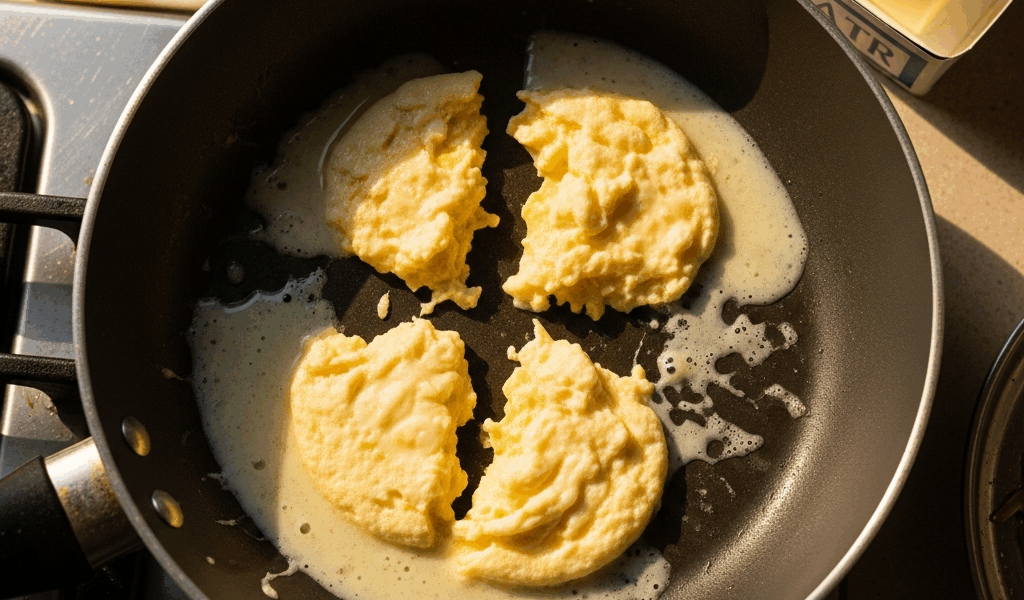
The Real Reason Your Scrambled Eggs Release Water
Scrambled eggs have gotten complicated with all the conflicting advice flying around. Low heat. High heat. Milk. No milk. Stir constantly. Never stir. Everyone has a system, and most of them produce watery, rubbery results anyway.
As someone who spent an embarrassing number of mornings scraping pale, weeping curds off a non-stick pan, I learned everything there is to know about what actually causes the problem. Today, I will share it all with you.
The culprit is heat. Not the eggs. Not the pan brand. Not whatever your grandmother told you about stirring speed. Heat — specifically, too much of it applied too fast.
Here’s what happens at the molecular level, minus the textbook jargon. Egg proteins are coiled molecules. They unwind when heated. As they unfold, they bond with neighboring proteins and trap water inside a loose network — like a sponge holding moisture. Push too much heat through that network too quickly, and those proteins contract violently. They squeeze out everything they were holding. That liquid pools at the bottom of your pan. You end up pushing pale, rubbery curds around in a small, sad puddle.
Frustrated by my own breakfast failures, I did what most people skip entirely — I tasted my scrambled eggs next to my father’s side by side. His were creamy, almost custard-like. Mine wept onto the plate like they had somewhere else to be. Same eggs from the same carton. Same pan style. The only real difference was his burner setting versus mine.
Once you understand that proteins expel moisture when overcooked, everything else makes sense. You stop chasing a recipe. You start managing heat to keep proteins calm and hydrated. That single reframe changes how you approach eggs completely — probably starting tomorrow morning.
You Are Cooking Them on Too High a Heat
High heat is the primary culprit. Full stop.
Most home cooks default to medium or medium-high because it feels appropriately fast for a simple breakfast. What actually happens at that setting is that proteins heat too aggressively to hold their structure. They contract and seize before proper curds can even form. Water escapes. You’re left with a grainy, wet mess instead of something soft and creamy.
The fix is almost insultingly simple: medium-low heat. That’s a 4 on a dial that runs to 10 — lower than your instincts will suggest. On an electric stove especially, it’s lower than you think it should be. Your gut will insist the eggs will take forever. They won’t. Maybe 90 extra seconds compared to high heat, but the texture difference is night and day.
Two ways to start:
- Cold pan, medium-low heat, cold butter added at the beginning. Let it melt slowly while the pan climbs to temperature. This gives proteins the gentlest possible warm-up.
- Preheat an empty pan on medium-low for about 30 seconds, then add room-temperature eggs to already-melted butter. Slightly faster, still conservative.
Either way, watch the butter. It should shimmer and coat the pan evenly — never brown. Brown butter means the surface is already too hot. If you see browning, your eggs are already heading toward rubbery before they even hit the pan.
The hardest part honestly isn’t the technique itself. It’s trusting that low heat actually works. Most of us grew up watching eggs cooked on high flames in diners, and somewhere along the way we absorbed the idea that faster means better. Not here. Gentle, patient heat produces soft, creamy curds. High heat produces squeezed-out moisture and regret — every single time.
You Are Stirring Too Fast or Not Enough
Even with correct heat, stirring can still ruin everything. The problem shows up as two completely opposite mistakes, and I’ve made both — usually depending on how awake I actually was that morning.
Mistake one: constant rapid scrambling from the moment eggs hit the pan. Stirring eggs like you’re trying to punish them breaks the forming curds into tiny fragments immediately. Tiny pieces expose more surface area to heat. They dry out faster. Combined with any pooling liquid, you get a grainy, wet scramble that looks depressing before it even reaches the plate.
Mistake two: walking away entirely. You add the eggs, go pour coffee, check your phone for 45 seconds. A flat, dry sheet has set on the bottom by the time you return. You stir it, but now you’re combining dried layers with raw egg on top. Uneven texture throughout. Definitely bland.
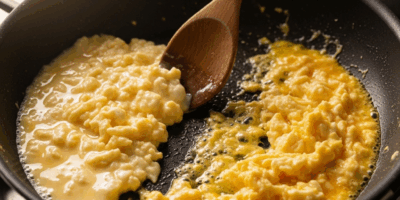
The right technique sits between those two extremes. Use a silicone spatula — the flexible rubber edge matters because it won’t scrape aggressively across your pan surface. Starting about 30 seconds after eggs meet hot butter, begin slow, deliberate folds. Pull cooked edges from the perimeter toward the center. Let larger curds form rather than breaking everything apart immediately.
The timing cue that actually matters: pull the pan off heat when the eggs still look slightly wet and loose on top. Not liquid. Not fully set. Slightly underdone. Residual heat finishes the job as you transfer them to the plate, and you land on creamy rather than rubbery.
Probably should have opened with this section, honestly. Most home cooks obsess over stirring because it feels technical and learnable. The truth is simpler — stir slowly, stir deliberately, and pull off heat about 20 seconds before you think you should. Watch the eggs, not a timer.
Adding Milk Is Making Things Worse
I grew up watching my mother add a splash of 2% milk to scrambled eggs every single morning. Someone taught her it makes them creamier. Someone taught that person too. It’s one of those kitchen myths that survives almost entirely because it comes from someone you trust.
But what does milk actually do? In essence, it dilutes the protein concentration in your egg mixture. But it’s much more than that — it actively works against you during cooking. Eggs are already roughly 90 percent water. Adding milk increases total water content without adding any extra protein to hold it in place. The proteins still contract under heat, still squeeze out moisture, but now there’s additional free liquid pooling in the pan because you added it deliberately.
The fix isn’t a secret ingredient. It’s removal. Stop adding milk entirely. If you want genuine richness — not just the idea of richness — add a small knob of butter directly to the eggs, or roughly a tablespoon of heavy cream per three eggs. Butter adds fat and flavor without extra water. Heavy cream has significantly higher fat content and lower water content than whole milk, so it contributes body without the weeping problem.
I’m apparently sensitive to the milk-to-egg ratio in ways I couldn’t explain for years, and the butter-only approach works for me while milk never quite did. Don’t make my mistake — or rather, don’t keep making it every morning for a decade before figuring it out.
One more thing: salt timing matters, even if it seems minor. Salt draws moisture out of eggs before they cook. Season after plating, not before. Adding salt to raw eggs while high heat already works against you is doubling down on the exact problem you’re trying to solve.
The Fix That Ties It All Together
Here’s the full system. Cold pan, medium-low heat, cold butter added immediately. Once the butter shimmers — never browns — add your eggs. Wait a full 30 seconds without touching anything. Then begin slow, deliberate folds using a silicone spatula, pulling cooked edges toward the center, letting large soft curds form naturally. Pull the pan completely off heat when the surface still looks slightly underdone. Season with flaky salt on the plate, not in the pan.
No milk. No rushing. No burner above a 4 or 5.
Repeat this three or four times and something clicks. Your hands learn the rhythm without thinking about it. Your eyes start recognizing what the eggs look like at the exact right moment to pull them. That creamy, tender texture you’ve been chasing — the one that always seemed like an accident when it happened — becomes the default result instead of the lucky exception. That’s what makes nailing scrambled eggs so endearing to home cooks everywhere. Once it clicks, it really clicks.
So, without further ado — go ruin one more batch on purpose at high heat, just to feel the difference. Then make them properly the next morning. You’ll never go back.


Stay in the loop
Get the latest home cuisine delights updates delivered to your inbox.