 Free Food Decision MakerSpinEatsSpin a wheel of nearby restaurants or recipes. End “what do you want to eat” forever. Free, no signup.Download for iPhoneGet it on Google Play
“What do you want to eat?” “I don’t care, what do you want?” The most common dinner conversation in American households loses an average of 14 minutes per night to mutual indecision. Forty-five days of life per couple, lost to a question no one wants to actually answer.
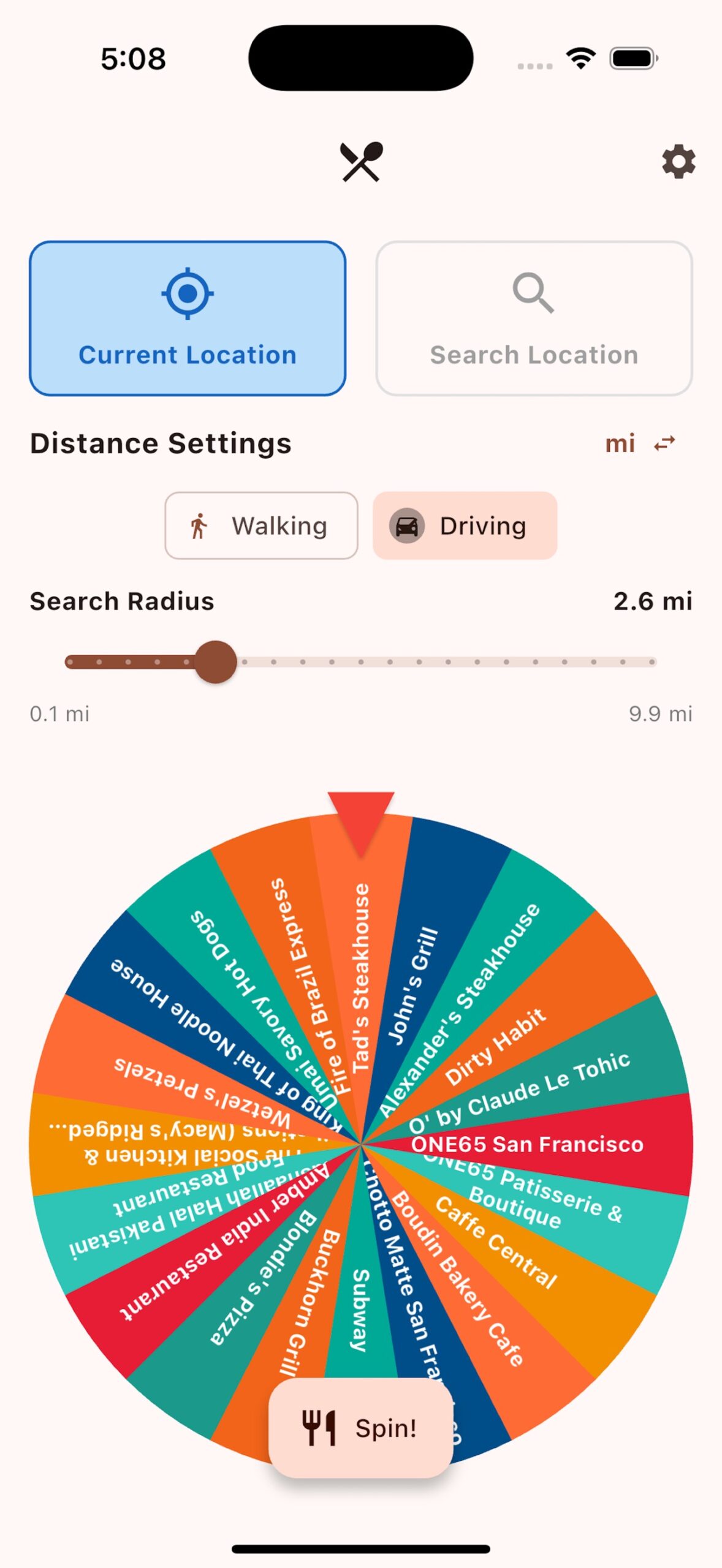
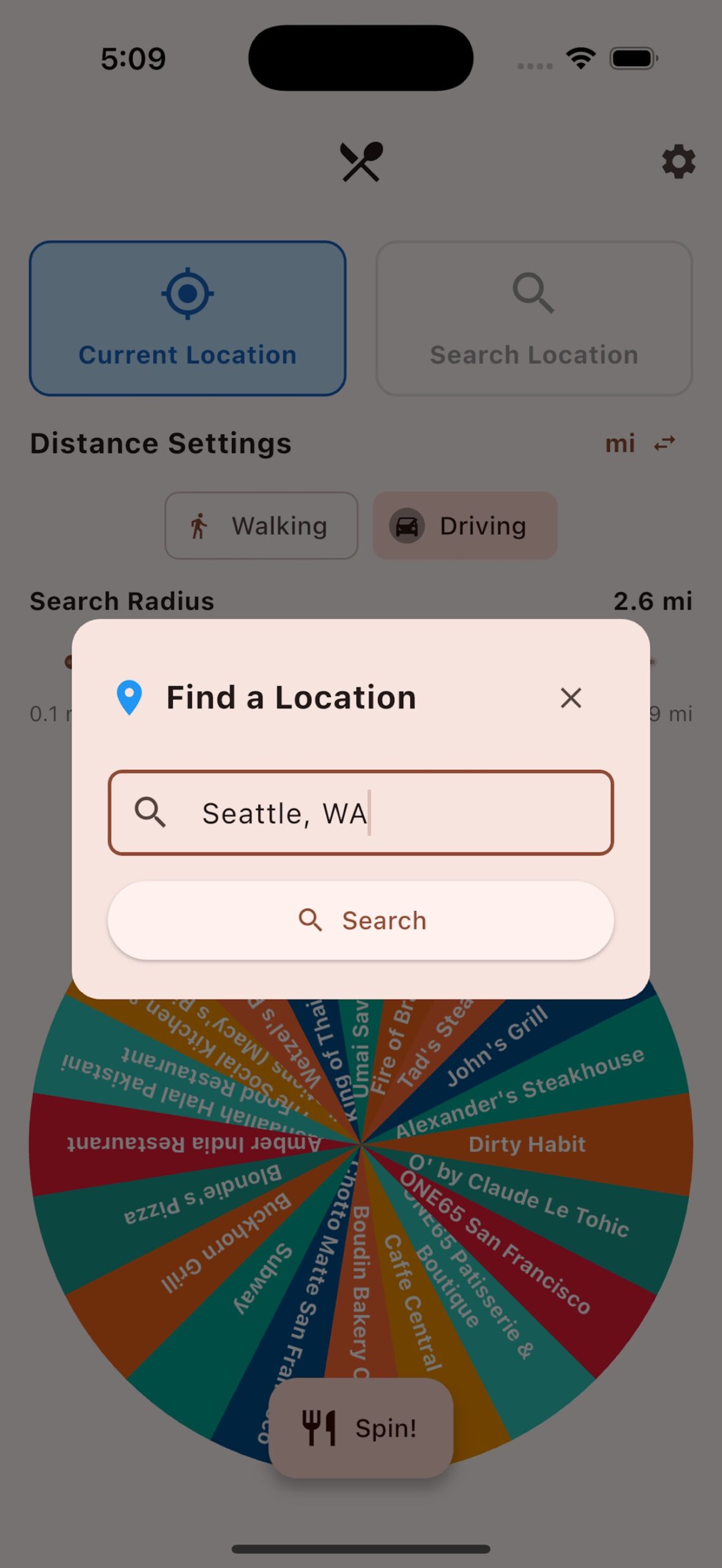
SpinEats was built to end this. It’s a food discovery app with a single core mechanic: spin a wheel of food options, accept what fate gives you. The wheel can contain nearby restaurants pulled from your location, recipes from a curated database, or your own custom list. After two months of forcing my household to use it for the weeknight dinner decision, here’s what works and what doesn’t.
The Core Mechanic
You open the app. You tap “spin.” A wheel of options rotates and lands on one. That’s dinner.
The wheel can be configured three ways:
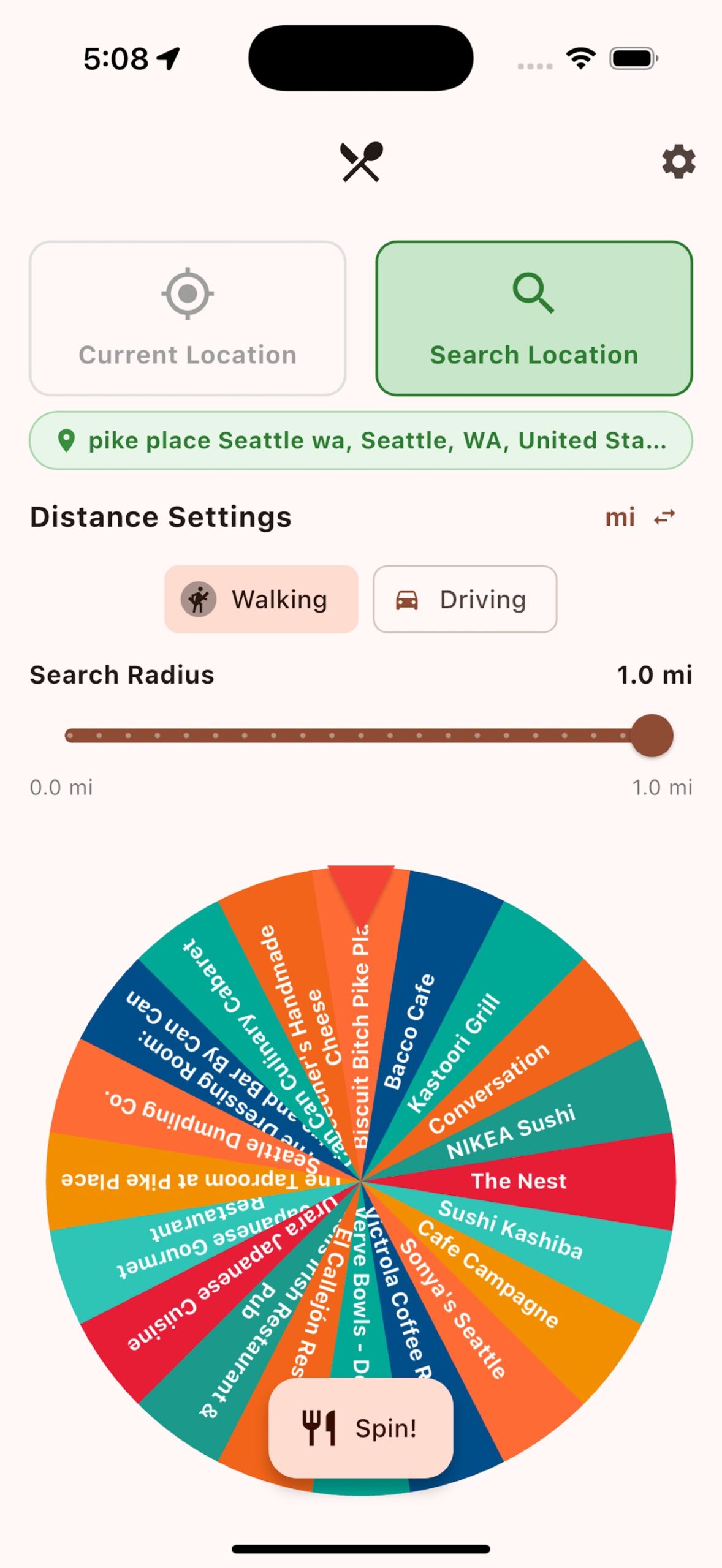
1. Nearby restaurants. The app pulls from a restaurant database within whatever radius you set (typically 1-5 miles). Filters let you exclude specific cuisines, price ranges, or rating thresholds.
2. Recipes. A curated database of recipes filtered by ingredients you have, cooking time, dietary restrictions. The wheel picks one and shows you the recipe.
3. Custom list. You enter your own options — a list of restaurants you frequent, family recipes, takeout favorites — and the wheel spins from your list.
The custom list mode is the one most households settle into. Within a few weeks you’ve built a list of 20-30 reliable options, and dinner decision time drops to under 30 seconds.
Why Spinning Works Better Than Choosing
The behavioral psychology here is real. The decision-fatigue research consistently shows that having to actively choose between options is more taxing than accepting a random result. Restaurant choice is a particularly draining decision because:
- Options multiply (any restaurant within driving range is technically a choice)
- Preferences vary across household members
- No option is obviously dominant
- The decision happens during an already-low-energy time of day
Outsourcing the choice to a random spin breaks the deliberation loop. Once you accept that you’ll go with whatever the wheel picks, the cognitive load drops to zero. You don’t evaluate options; you just go.
The first few times, household members will reject results they don’t like (“not Indian tonight”). After a few weeks, the rejection rate drops as everyone learns that re-spinning until you get your preferred answer is the same as just choosing — and the whole point was to stop choosing.
The Restaurant Discovery Use Case
For couples and families who default to the same 4-5 restaurants because deciding is easier than exploring, SpinEats forces variety. The nearby-restaurants mode pulls in establishments you’ve never visited but that match your filter criteria.
The first month I used it, we ended up at three restaurants within 2 miles of our house that had been there for years and we’d never tried. Two became regulars. One was forgettable, and the wheel knew not to spin it again (the app tracks rejections to bias future spins).
For travelers and out-of-town visitors, the discovery mode is particularly useful. You’re somewhere unfamiliar, you don’t know what’s around, and the local-recommendation problem is amplified by unfamiliarity. The wheel forces a decision that might otherwise spiral into endless review-reading.
The Recipe Discovery Use Case
For households cooking at home, the recipe mode solves the “what should we cook tonight” problem with the same mechanic. You filter by what’s in your fridge, by cooking time, by dietary restrictions, and the wheel picks something within those constraints.
The curated recipe database isn’t enormous — a few hundred dishes across major cuisines — but it’s quality-filtered rather than algorithm-generated. Most recipes are real and tested.
The constraint-based filtering is the practical feature. “I have chicken, rice, and broccoli, want 30 minutes or less, no nuts” — the wheel only spins matching recipes. This is a more useful constraint than “Italian” or “Asian” because it matches your actual situation.
Custom Lists — The Power User Mode
The most-used mode after a few weeks is the custom list. Your household builds a list of 20-30 options that includes:
- 3-5 favorite restaurants you order from regularly
- 2-3 takeout-only spots
- 5-8 recipes you make confidently
- 2-3 “we should try this again” places
- 1-2 “splurge night” restaurants
The list becomes your household’s decision-eliminating asset. New options get added; underperforming options get removed. The wheel becomes a fair lottery across actually-acceptable choices.
This is the workflow that survives in most households after the novelty wears off. The discovery mode is fun but unpredictable; the recipe mode is useful for cooking; the custom list is the daily-use feature.
RESTAURANT ROULETTESpinEatsSpinEats— the spinning wheel that picks dinner so you don’t have to. Free, no signup, no ads.Download for iPhoneGet it on Google PlayThe Compromise Mechanic
For households where one member would rather choose than spin, SpinEats has a “narrow it down” mode. You pre-filter to 3-5 options manually, then spin from the narrowed pool. This preserves agency while still breaking the indecision loop.
Some couples I’ve talked to use this exclusively. The household discussion becomes “which 3 should be on the wheel” rather than “which one should we eat.” Easier to agree on a small candidate list than to commit to a single choice.
What It’s Not For
Honest assessment:
Strict dietary requirements. If someone in your household has serious allergies, severe restrictions, or specific medical-eating requirements, the random spin doesn’t account for that well. Filter the custom list to safe options only, but the discovery modes can suggest things you can’t actually eat.
Special occasions. Anniversaries, birthdays, milestone dinners — these aren’t decisions to outsource to a wheel. SpinEats is for the daily mundane decision, not the special-occasion decision.
Strict budget households. If you have a fixed weekly food budget that requires shopping to a plan, the discovery modes don’t optimize for cost. The custom-list mode lets you control this, but discovery-mode is built for “spend on whatever the wheel picks” not “stay under $X this week.”
The Social Dynamic
One unexpected benefit: SpinEats removes the “you decide” / “no, you decide” loop that’s the source of low-grade household friction. Both partners agree to abide by the wheel; the wheel decides; neither partner has to advocate for or against anything.
This sounds trivial but for couples who’ve had the same dinner argument for years, breaking the pattern is genuinely useful. The wheel becomes the third party.
Same dynamic works for groups deciding together — friend groups picking restaurants for an outing, families on vacation, work teams choosing where to eat lunch. The decision-by-random-spin is fairer-seeming than any individual’s choice.
Practical Tips From Two Months of Use
1. Build the custom list in the first week. Don’t try to use discovery-mode exclusively at first. Build a list of 15-20 known-good options first, then layer in discovery for variety later.
2. Set the cooking-time filter accurately. The recipe mode often suggests recipes longer than you have time for. Set the time filter tight — 30 minutes for weeknights, 60 minutes for weekends.
3. Use the rejection feature. When the wheel picks something you absolutely won’t do, mark it rejected. The app learns and biases future spins away from your common rejections.
4. Don’t re-spin too often. If you re-spin 5 times until you get the answer you wanted, you’ve defeated the purpose. Commit to the first or at most second spin.
5. Add seasonal items. When weather changes, your appetite changes. Refresh the custom list seasonally — summer salads in July, hearty soups in January.
For Households Tired of the Dinner Question
SpinEats won’t save your relationship, transform your eating habits, or magically improve your meals. It does one thing: it eliminates the dinner decision. For households where the decision itself is the friction point, that one feature is enough.
The app is free with no subscription paywall. The premium features (extended history, advanced filters) are modest additions, not the core value. Most households use the free tier exclusively.
Worth installing if your household loses meaningful time per week to the “what should we eat” question.
RESTAURANT ROULETTESpinEatsSpin a wheel. Eat the answer. End “what do you want for dinner” forever. Free.Download for iPhoneGet it on Google Play



Stay in the loop
Get the latest home cuisine delights updates delivered to your inbox.