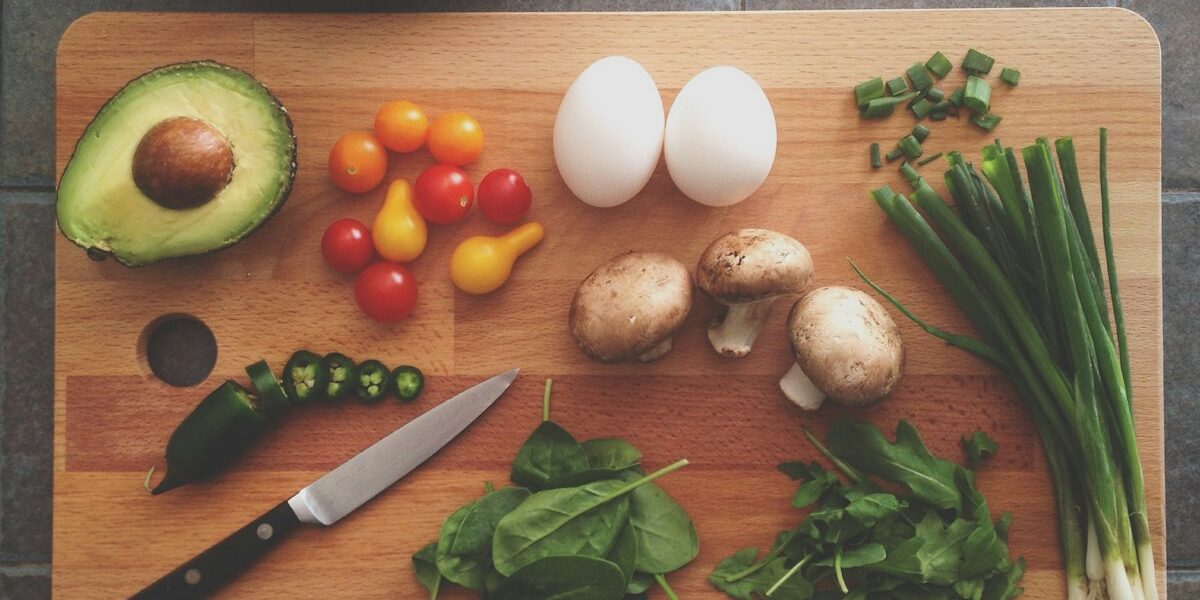
Used dull knives for years because sharpening seemed intimidating. Finally learned. Night and day difference. Sharp knives are safer and make cooking actually enjoyable.
Why Sharp Matters
Dull knives slip off food and into fingers. Sharp knives go where you point them. Counter-intuitive but true – sharp is safer.
Plus everything is easier. Onions don’t make you cry as much when you slice clean instead of crushing.
Honing vs Sharpening
That steel rod isn’t sharpening – it’s honing. Straightens the edge, doesn’t create a new one. Do it often, before or after each use.
Actual sharpening removes metal to create a new edge. Needed less often but eventually necessary.
Whetstone Basics
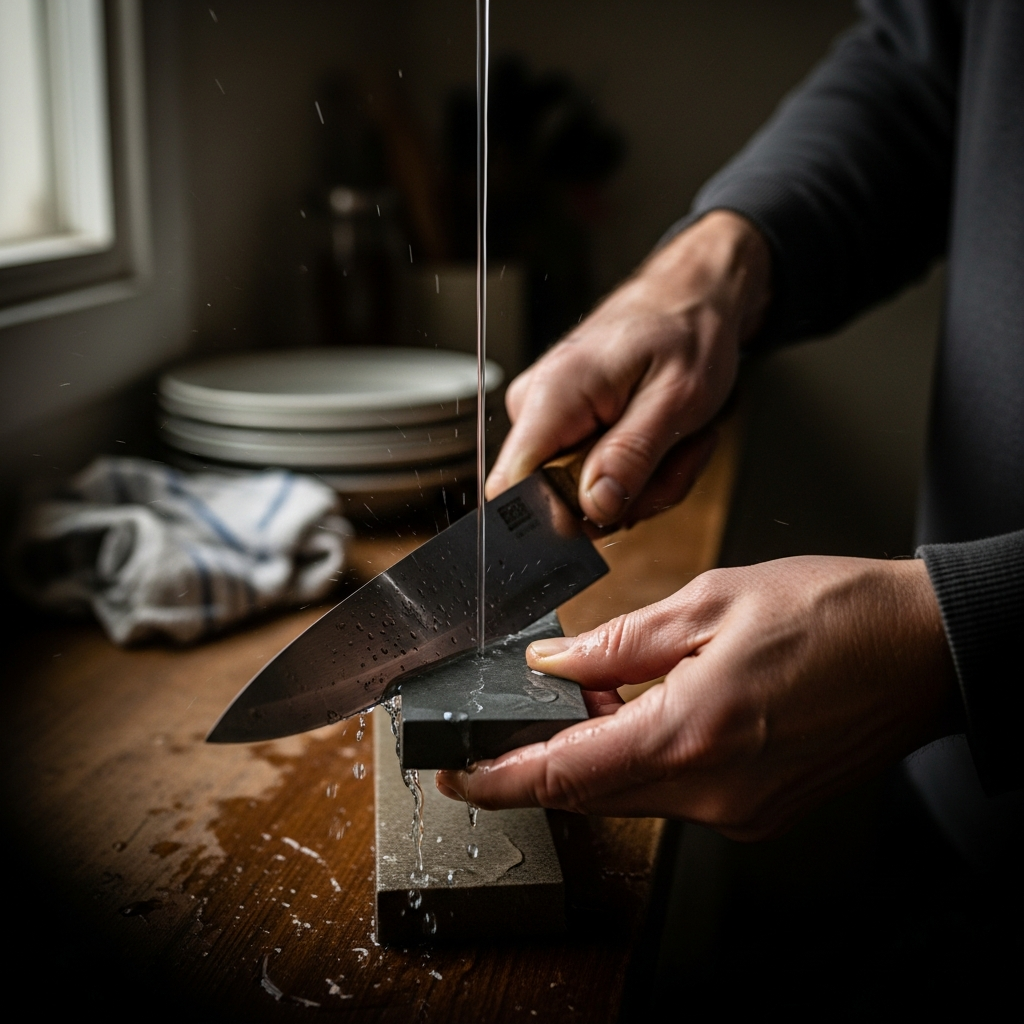
Soak water stones for 10-15 minutes. Hold knife at consistent angle – around 15 degrees for Japanese, 20 for Western. Stroke blade across stone, maintaining angle. Work both sides equally.
Start with coarse grit, move to fine. It’s a skill – expect the first few attempts to be rough.
Electric Sharpeners
Easier but remove more metal. Fine for beater knives, maybe skip them for nice Japanese blades. They work, just not ideal for everything.
Professional Sharpening
Many kitchen stores offer it. Usually $5-10 per knife. Not a bad option if you don’t want to learn the skill yourself.
Maintenance
Don’t put knives in the dishwasher. Don’t store them loose in drawers banging against stuff. Hand wash, dry immediately, store properly. Basics that preserve your edge.


Stay in the loop
Get the latest home cuisine delights updates delivered to your inbox.