
Why Food Safety Matters More Than You Think
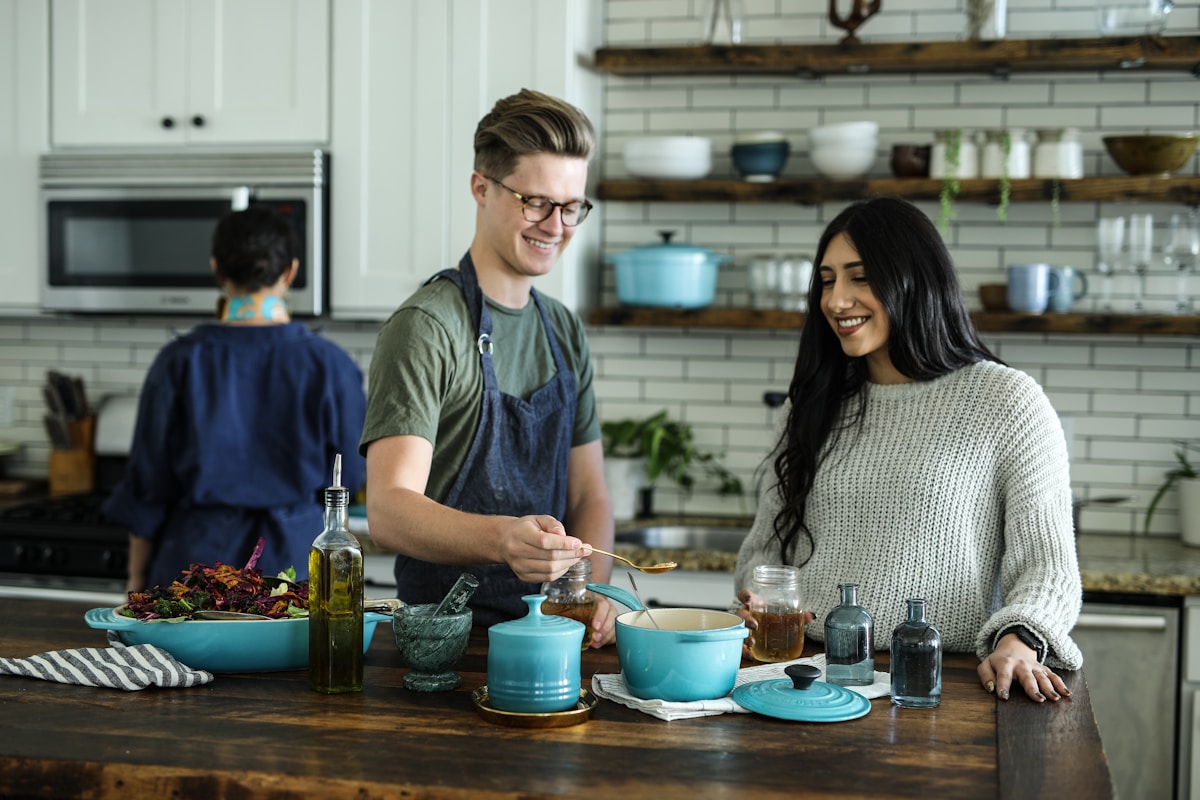
You leave chicken breasts on the counter to thaw for a couple of hours. You taste cookie dough with raw eggs. You let Thanksgiving turkey sit on the table for three hours before putting leftovers away. These common practices seem harmless—everyone does them—but they violate fundamental food safety rules that prevent foodborne illness.
The CDC estimates 48 million Americans get sick from foodborne diseases annually. 128,000 are hospitalized. 3,000 die. Most of these illnesses happen at home, not restaurants, because home cooks often don’t understand the “danger zone”—the temperature range where bacteria multiply rapidly—and other critical safety rules.
Understanding food safety doesn’t require culinary school training. It requires knowing a few key principles and consistently applying them. Here’s what every home cook needs to know about the danger zone and related food safety rules that prevent illness.
The Danger Zone: 40°F to 140°F
Why This Temperature Range Matters
Between 40°F and 140°F, bacteria that cause food poisoning multiply rapidly. The optimal bacterial growth temperature is around 98°F (human body temperature), but dangerous bacteria grow throughout the entire danger zone.
How rapidly? Under ideal conditions, bacteria can double every 20 minutes. One bacterium becomes two. Two become four. Four become eight. Within 7 hours, one bacterium multiplies to over 2 million. This exponential growth means that the longer food stays in the danger zone, the higher the bacterial load—and the greater your risk of illness.
The Two-Hour Rule
Perishable food should never remain in the danger zone for more than 2 hours total. This includes:
– Time food sits at room temperature during prep
– Time food sits on the table during meals
– Time leftovers cool before refrigeration
– Time it takes to drive groceries home from the store
When room temperature exceeds 90°F (summer picnics, hot cars), this window shrinks to 1 hour. Bacteria multiply faster in warmer conditions.
Common Danger Zone Violations
**Thawing meat on the counter:** Frozen meat’s surface reaches dangerous temperatures long before the center thaws. The exterior may spend 4-6 hours in the danger zone—plenty of time for massive bacterial growth.
**Solution:** Thaw in refrigerator (safest), in cold water (changing water every 30 minutes), or in microwave (cook immediately after). Never at room temperature.
**Letting food cool before refrigerating:** The old advice about letting food cool to room temperature before refrigerating was based on concerns about old refrigerators struggling with hot foods. Modern refrigerators handle hot foods fine.
**Solution:** Refrigerate hot leftovers immediately. Divide large quantities into shallow containers for faster cooling.
**Leaving buffet foods out for extended periods:** Holiday meals, potlucks, and parties commonly feature food sitting at room temperature for 3-4 hours or longer.
**Solution:** Use warming trays to keep hot foods above 140°F, or ice baths to keep cold foods below 40°F. Discard anything that’s been at room temperature for over 2 hours.
Safe Minimum Internal Temperatures
Cooking food to proper temperatures kills harmful bacteria. But “looks cooked” isn’t good enough—you need a meat thermometer to verify safe temperatures.
USDA Safe Minimum Internal Temperatures
**Poultry (chicken, turkey, duck):** 165°F
This includes whole birds, parts, ground poultry, and stuffing (whether cooked inside or outside bird).
**Ground meats (beef, pork, lamb, veal):** 160°F
Ground meat has more surface area where bacteria can grow. Higher temperature is necessary.
**Beef, pork, lamb, veal (steaks, chops, roasts):** 145°F with 3-minute rest
Whole cuts of meat are safer because bacteria mainly affect surface, which reaches high temperatures first.
**Fish and shellfish:** 145°F
Fish flesh should be opaque and separate easily with a fork.
**Eggs:** 160°F or until yolk and white are firm
This applies to egg dishes (quiches, casseroles). Fried or scrambled eggs should be cooked until no liquid egg remains.
**Leftovers and casseroles:** 165°F
When reheating, bring food back to 165°F to kill any bacteria that may have grown during storage.
How to Use a Meat Thermometer Correctly
Many home cooks own thermometers but use them incorrectly:
**Insert into the thickest part:** This is where temperature lags. Thin portions cook faster.
**Avoid bone, fat, gristle:** These conduct heat differently than muscle and give false readings. Insert into muscle tissue.
**Check multiple spots:** Large roasts or whole birds may have temperature variations. Check the thickest part of breast, thigh, and wing (for poultry).
**Don’t trust pop-up timers:** These are unreliable. Use a real thermometer.
Types of Thermometers
**Instant-read digital:** Most versatile. Insert into food near end of cooking for quick reading. Not oven-safe (remove after checking).
**Probe thermometer with cord:** Insert probe into meat, run cord outside oven, monitor temperature continuously. Ideal for roasts.
**Infrared thermometer:** Measures surface temperature only. Not suitable for checking internal doneness, but useful for checking griddle or pan temperature.
**Calibration:** Test thermometer accuracy in ice water (should read 32°F) or boiling water (should read 212°F at sea level, lower at altitude). Many digital thermometers have calibration functions.
Cross-Contamination: The Hidden Danger
What Is Cross-Contamination?
Cross-contamination occurs when bacteria from raw food (especially meat, poultry, seafood) transfer to ready-to-eat foods through:
– Shared cutting boards
– Unwashed hands
– Contaminated utensils
– Juices dripping from raw meat onto other foods in refrigerator
– Using same plate for raw and cooked meat
Preventing Cross-Contamination
**Separate cutting boards:** Use one board for raw meat/poultry/seafood, another for produce and ready-to-eat foods. Color-coded boards help prevent confusion (red for meat, green for vegetables is common).
**Wash hands frequently:** Wash with soap and water for 20 seconds after handling raw meat, before handling other foods, and before eating. Hand sanitizer doesn’t replace handwashing for food safety.
**Separate utensils:** Don’t use the same knife, tongs, or fork for raw and cooked foods without washing in between.
**Refrigerator organization:** Store raw meat on the bottom shelf where juices can’t drip onto other foods. Use containers or plates under meat packages to catch any leaks.
**Plate safety:** Never put cooked meat back on the same plate that held raw meat unless you’ve washed the plate thoroughly first.
Refrigerator and Freezer Storage Guidelines
Proper Storage Temperatures
**Refrigerator:** 40°F or below
**Freezer:** 0°F or below
Most home refrigerators run slightly warmer than ideal (42-45°F) unless adjusted. Use a refrigerator thermometer to verify temperature. Don’t trust the appliance’s built-in temperature display—these are often inaccurate.
How Long Foods Stay Safe
Even refrigerated, foods don’t last forever. Bacteria still grow, just more slowly.
**Fresh raw meat (beef, pork, lamb):** 3-5 days
**Fresh raw poultry:** 1-2 days
**Fresh raw fish:** 1-2 days
**Ground meat:** 1-2 days
**Cooked meat:** 3-4 days
**Cooked poultry:** 3-4 days
**Cooked fish:** 3-4 days
**Hard-cooked eggs:** 1 week
**Egg salad, chicken salad, tuna salad:** 3-4 days
**Leftover pizza:** 3-4 days
**Opened lunch meat:** 3-5 days
**Opened package of hot dogs:** 1 week
These are maximum times. Food quality (taste, texture) often deteriorates before safety becomes an issue.
Freezer Storage
Frozen food at 0°F is safe indefinitely—bacteria can’t grow. But quality degrades over time from freezer burn and oxidation.
**Recommended freezer times (for quality, not safety):**
– Ground meat: 3-4 months
– Steaks, chops, roasts: 4-12 months
– Whole poultry: 1 year
– Poultry parts: 9 months
– Fish (fatty): 2-3 months
– Fish (lean): 6-8 months
– Cooked meals: 2-3 months
Use freezer bags or vacuum sealing to prevent freezer burn. Mark packages with contents and date.
High-Risk Foods and Special Precautions
Raw Eggs
Raw eggs can contain Salmonella bacteria inside the egg, not just on the shell.
**Risks:**
– Cookie dough, cake batter containing raw eggs
– Homemade Caesar dressing
– Homemade mayonnaise
– Raw or undercooked eggs (sunny-side up, soft scrambled)
**Safer alternatives:**
– Use pasteurized eggs for recipes requiring raw or undercooked eggs
– Cook eggs until yolk and white are firm
– Use commercial mayonnaise (made with pasteurized eggs)
Raw Sprouts
Sprouts (alfalfa, bean, clover) are high-risk because they’re grown in warm, humid conditions ideal for bacteria. E. coli and Salmonella outbreaks are common.
**Safer approach:** Cook sprouts to kill bacteria, or avoid entirely if immunocompromised.
Raw Seafood
Sushi, oysters, ceviche, and poke contain raw fish that may harbor parasites or bacteria.
**Risk reduction:**
– Buy sushi-grade fish from reputable sources
– Sushi-grade fish is typically frozen to kill parasites
– Pregnant women, young children, elderly, and immunocompromised should avoid raw seafood
Unpasteurized (Raw) Milk and Cheese
Raw milk can contain Campylobacter, E. coli, Listeria, and Salmonella. Pasteurization kills these pathogens without significantly affecting nutrition.
**Safe alternative:** Use only pasteurized milk and cheese, especially for high-risk individuals.
Raw Flour
Flour isn’t sterile. E. coli outbreaks have been traced to raw flour in cookie dough and baking mixes.
**Risk reduction:** Don’t eat raw dough or batter. Heat-treat flour at 350°F for 5 minutes if making edible cookie dough.
Special Populations at Higher Risk
Some people face higher risk from foodborne illness:
**Pregnant women:** Risk of Listeria causing miscarriage or stillbirth. Avoid deli meats unless heated to steaming, soft cheeses made from unpasteurized milk, raw seafood, and raw sprouts.
**Young children (under 5):** Immune systems aren’t fully developed. Avoid raw or undercooked eggs, raw milk, raw sprouts, and unpasteurized juice.
**Elderly (over 65):** Immune function declines with age, increasing susceptibility to foodborne infections.
**Immunocompromised:** People with HIV/AIDS, cancer treatment, diabetes, organ transplants, or taking immune-suppressing medications face much higher risk from foodborne pathogens.
These groups should be especially careful about food safety rules and avoid high-risk foods entirely.
Recognizing and Handling Spoiled Food
When to Throw Food Away
**Visual signs:**
– Mold (discard entire product—mold roots extend beyond visible portions)
– Sliminess on meat or poultry
– Cloudy liquids that should be clear
– Color changes (meat turning gray or brown, although some color change from oxygen exposure is normal)
**Smell test:**
– Sour or off odors
– Ammonia smell from seafood
– Rotten egg smell
**Texture changes:**
– Excessive softness in fruits/vegetables
– Slimy texture
– Separation or curdling in dairy
**Important:** Dangerous bacteria don’t always cause obvious spoilage. Food can look, smell, and taste fine but still harbor pathogens. This is why time/temperature rules matter—you can’t rely on sensory evaluation alone.
The “When in Doubt, Throw It Out” Principle
If you’re unsure whether food is safe:
– Don’t know how long it’s been in the danger zone? Discard it.
– Not sure if it reached safe temperature? Discard it.
– Can’t remember when you bought it? Discard it.
– Looks or smells questionable? Discard it.
The cost of discarded food is far less than the cost of foodborne illness—missed work, medical bills, potential hospitalization.
Safe Food Handling During Meal Prep
Before You Start Cooking
**Wash hands:** 20 seconds with soap and water. This is the single most important food safety practice.
**Clean surfaces:** Wash countertops and cutting boards with hot, soapy water before food prep.
**Don’t wash raw meat:** Washing meat splashes bacteria-containing water across sinks and counters. Cooking kills bacteria—washing spreads it.
**Do wash produce:** Rinse fruits and vegetables under running water. Use a produce brush for firm items (melons, potatoes). Even if you peel it, wash first—the knife carries surface bacteria into the fruit when cutting.
During Cooking
**Avoid tasting raw dough or batter:** This exposes you to raw flour and raw eggs.
**Use clean spoons for tasting:** Don’t put the tasting spoon back into cooking food after it touches your mouth.
**Keep hot foods hot (above 140°F) and cold foods cold (below 40°F):** If prep takes longer than 2 hours, refrigerate ingredients between tasks.
After Cooking
**Serve immediately or refrigerate within 2 hours:** Don’t let cooked food linger in the danger zone.
**Use clean plates and utensils for serving:** Don’t use the same utensils that touched raw food.
**Divide large quantities:** Store leftovers in shallow containers (2 inches deep or less) so they cool quickly.
Reheating Leftovers Safely
**Bring to 165°F throughout:** Don’t just warm food—heat it thoroughly to kill any bacteria that grew during storage.
**Stir during reheating:** Microwaves heat unevenly. Stirring distributes heat. Let food stand for 2 minutes after microwaving to allow temperature to equalize.
**Boil soups and gravies:** Bring to rolling boil when reheating.
**Don’t reheat multiple times:** Each reheating cycle increases risk. Portion leftovers so you only reheat what you’ll eat.
Power Outages and Food Safety
**Refrigerator without power:**
– Keeps food cold for 4 hours if you don’t open the door
– Discard perishables after 4 hours at >40°F
**Freezer without power:**
– Full freezer stays cold for 48 hours
– Half-full freezer stays cold for 24 hours
– If food still has ice crystals, it’s safe to refreeze (though quality may suffer)
Use coolers with ice if power will be out longer.
The Bottom Line on Food Safety
Food safety isn’t complicated, but it requires consistency. The danger zone (40-140°F), the two-hour rule, proper cooking temperatures, and preventing cross-contamination—these aren’t optional guidelines. They’re evidence-based practices that prevent illness.
Most people violate these rules regularly without getting sick. But “I’ve always done it this way and never gotten sick” isn’t sound reasoning. Foodborne illness often resembles flu (people blame “stomach flu” when it was actually food poisoning). When severe cases occur, the consequences can be devastating—hospitalization, kidney failure, chronic conditions, even death.
Buy a good instant-read thermometer. Keep your refrigerator at 40°F or below. Follow the two-hour rule. Prevent cross-contamination. These simple practices dramatically reduce your risk and ensure that the meals you lovingly prepare don’t make anyone sick.

Stay in the loop
Get the latest home cuisine delights updates delivered to your inbox.