Restaurant-quality plating has gotten complicated with all the molecular gastronomy tricks and Instagram-worthy presentations flying around. As someone who’s spent years refining home cooking presentation, I learned everything there is to know about making plates look professional without special tools or training. Today, I will share it all with you.
You don’t need tweezers, squeeze bottles, or artistic talent to make food look appealing. Good plating follows simple principles that anyone can master with practice.
The Foundation: Choose the Right Plate
Plate selection matters more than most home cooks realize. White plates remain the professional standard because they provide neutral contrast that makes food colors pop. Size matters too—use plates large enough that food doesn’t crowd the edges, but not so large that portions look skimpy.
For most entrees, 10-12 inch dinner plates work perfectly. Smaller 8-9 inch plates suit appetizers and desserts. Avoid busy patterns that compete with your food for visual attention.
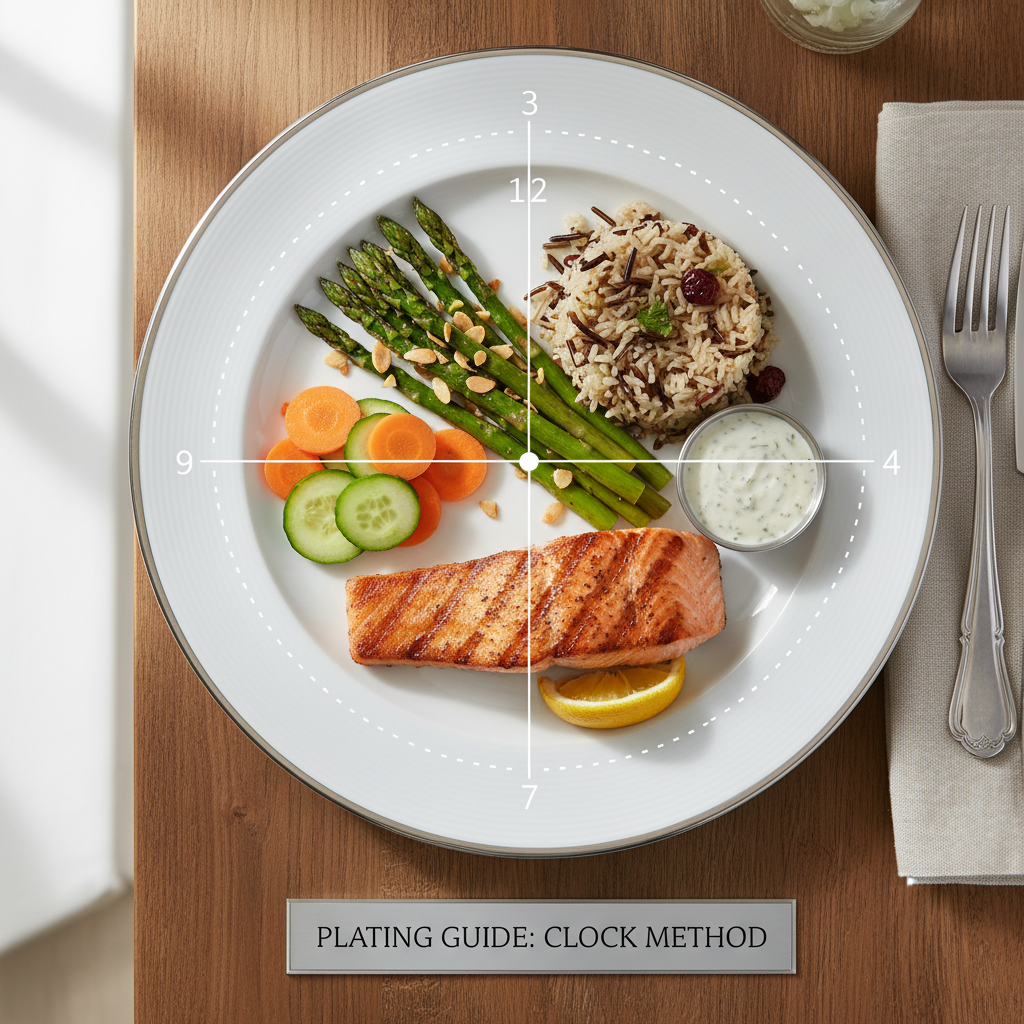
The Clock Method
Professional kitchens use the clock method for consistent plating. Think of the plate as a clock face. Place the protein at 6 o’clock, starch at 2 o’clock, and vegetables at 10 o’clock. This creates natural visual balance and makes every plate look intentional.
That’s what makes this technique endearing to us home cooks—it removes guesswork and produces reliably good results.
Height Creates Interest
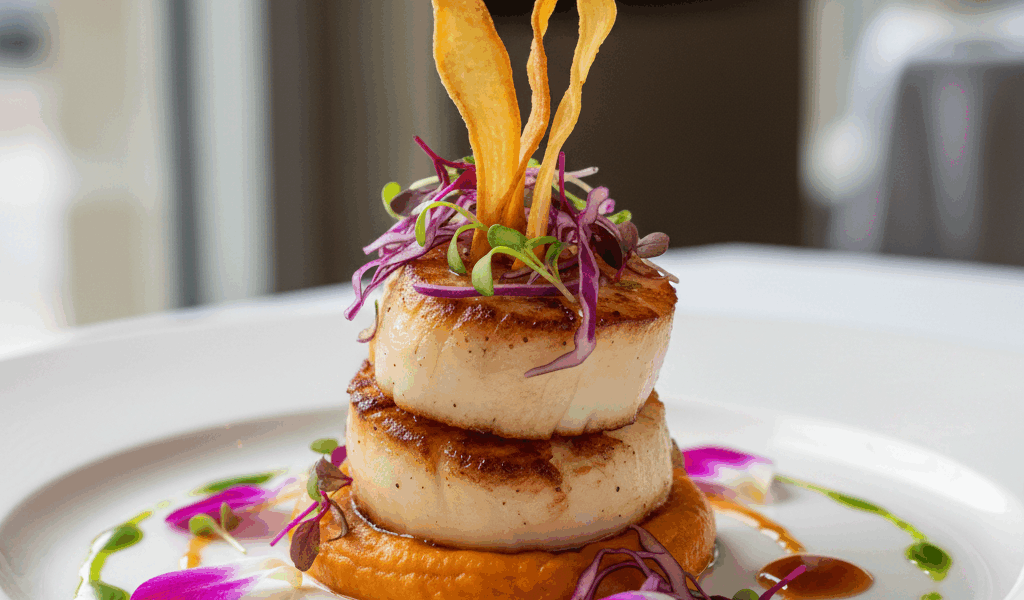
Flat food looks boring. Building vertical elements draws the eye and suggests abundance. Stack vegetables instead of spreading them flat. Lean protein against the starch for support. Use garnishes that add height—microgreens standing upright, herbs with stems attached.
Even simple changes make dramatic differences. A chicken breast laid flat looks plain. The same breast sliced and fanned with slight separation between pieces looks restaurant-quality.
Sauce Techniques
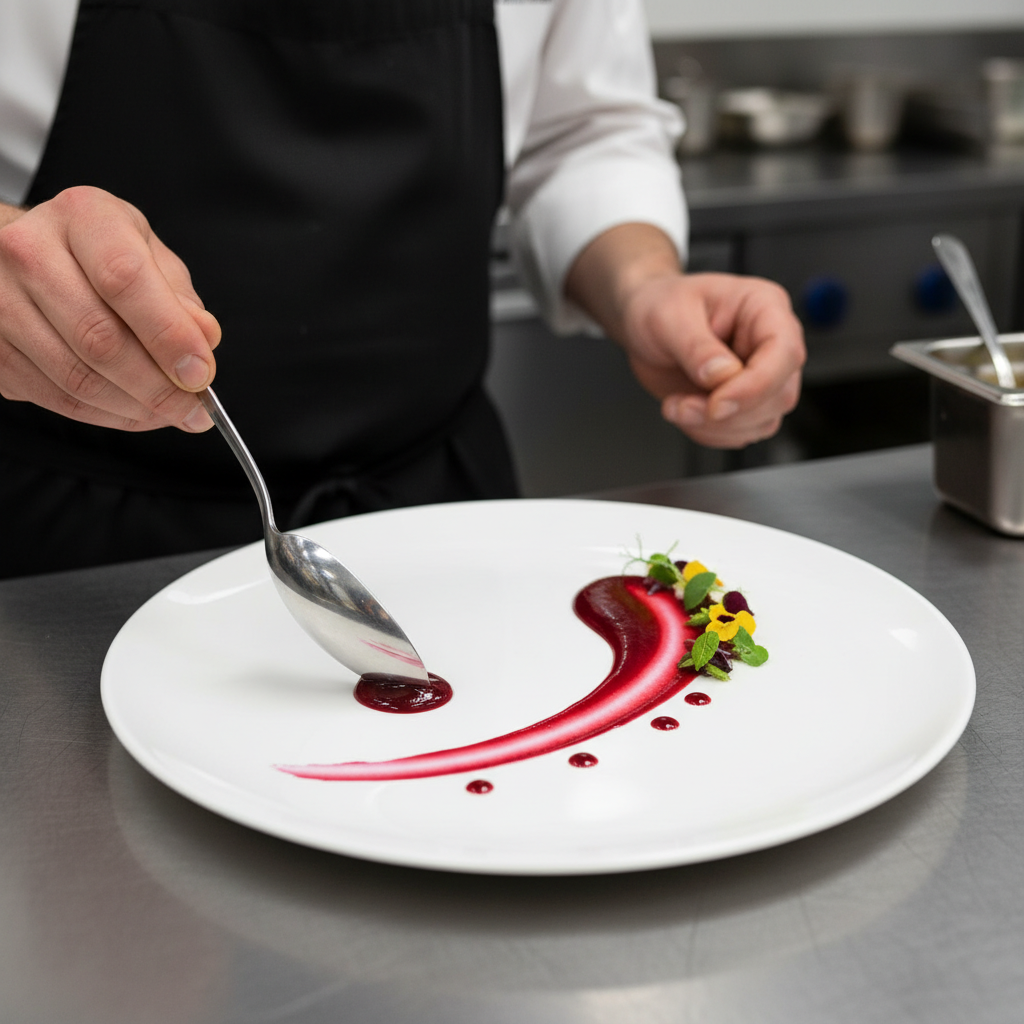
Sauce placement separates amateur plating from professional presentation. Never pour sauce over food—it obscures what you’ve cooked and creates a messy appearance. Instead, place sauce under the protein, swipe it across the plate with the back of a spoon, or dot it around the composition.
For swipes, load a tablespoon with sauce, place it on the plate, then drag the back of the spoon across in one smooth motion. Practice makes this look effortless.
The Rule of Odds
Odd numbers of elements create more pleasing compositions than even numbers. Three scallops look better than four. Five asparagus spears beat six. This principle applies across visual arts, and plating is no exception.
Negative Space
Empty plate space isn’t wasted—it’s essential. Crowded plates look chaotic. Leave roughly one-third of the plate visible to create breathing room. The eye needs places to rest between visual elements.
Color Contrast
Plan for color variety on every plate. Brown protein, brown starch, and brown sauce creates a monochrome disaster. Add bright vegetables, fresh herbs, or colorful garnishes to provide contrast.
Green herbs brighten almost any plate. Bright cherry tomatoes add red pops. Roasted carrots bring orange. Think about color balance when planning meals.
Clean the Rim
Before service, check plate rims for drips, smears, and fingerprints. Keep a damp towel handy and wipe rims clean. This final detail separates casual presentation from professional plating.
Garnish with Purpose
Every garnish should be edible and complementary to the dish. Inedible decorations are outdated restaurant tricks from the 1980s. Fresh herbs that appear in the recipe work perfectly. Microgreens add color and delicate flavor. Citrus zest brightens and enhances.
Skip garnishes that add nothing—parsley sprigs that get pushed aside, kale used as plate decoration, or anything purely ornamental.
Practice Makes Progress
Plating skills develop through repetition. Take photos of your plates to track improvement over time. Notice what works and what doesn’t. Adjust based on what you see.
Start by mastering one technique—perhaps the clock method or sauce swiping—before adding complexity. Professional plating isn’t about complicated tricks. It’s about consistently executing simple principles that make food look as good as it tastes.