The Real Reason Your Pasta Tastes Bland Even With Sauce
Pasta seasoning has changed with all the conflicting advice flying around.
The frustration hits the same way every time. You’ve built a solid sauce— maybe cacio e pepe, maybe a bolognese that’s been going since noon, maybe just good olive oil and four cloves of garlic. You taste it straight from the pan. Genuinely delicious. You drain the pasta, toss everything together, take a bite, and something is just… off. The pasta itself is flat. Hollow. Like seasoned sauce wrapped around unseasoned cardboard.
Most home cooks assume they can fix this at the table. Add salt after plating. Taste again. Done.
It doesn’t work that way. Not really.
Pasta is porous. While it cooks— anywhere from eight to twelve minutes depending on shape— it absorbs not just heat but actual flavor. Sodium ions work their way into the starch structure in real time. The window closes the second you drain that pot. Once the pasta hits the colander, that opportunity is gone. Salt sprinkled over a finished plate never reaches the interior of each strand the way cooking salt did— at least not in any meaningful way.
What you end up with? Pasta seasoned on the outside, bland straight through the middle. The sauce carries all the flavor. The pasta just… exists. A vehicle instead of a partner.
This is fixable. But the fix happens before the boil, not after. And it starts with understanding exactly how much salt should actually go in that pot.
How Much Salt Actually Goes in Pasta Water
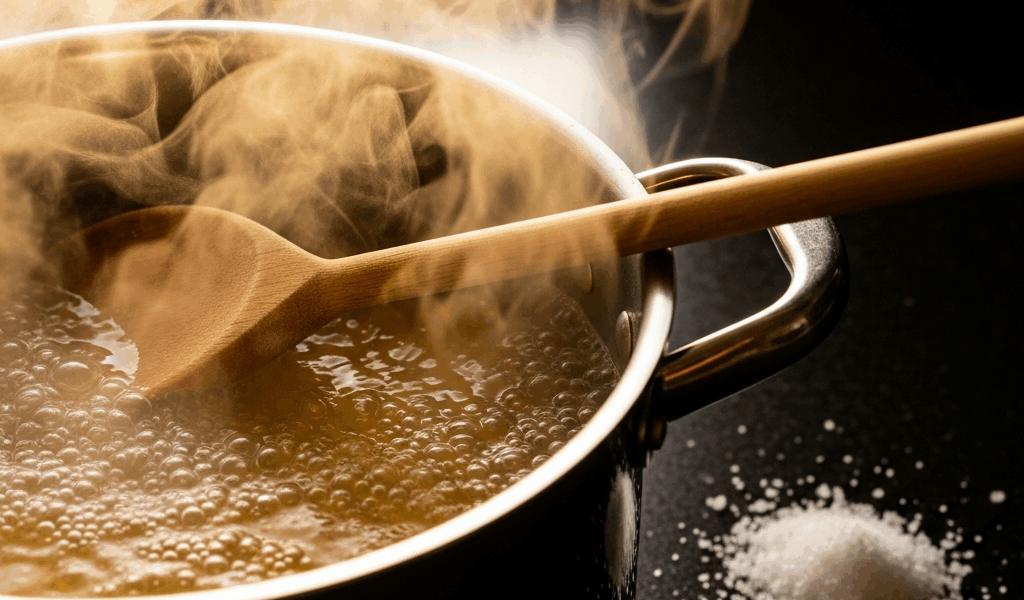
One and a half tablespoons of kosher salt per four quarts of water. That’s the number.
Measure it. Use an actual measuring spoon. Don’t eyeball it, don’t “salt generously,” don’t guess. Those vague instructions are precisely how you ended up here— pasta tasting like nothing, wondering what went wrong. I’ve read enough hand-wavy pasta articles to know that the lack of specificity is the whole problem.
For a standard one-pound box, you’re cooking in four to six quarts. One and a half tablespoons covers that range comfortably. I’ve tested up to two tablespoons— the pasta tastes noticeably, almost aggressively seasoned throughout, which some people love. Anything below one tablespoon, though? That’s underseasoning. Full stop.
Now for the myth that has genuinely ruined more home pasta than any bad technique ever could. “Pasta water should taste like the sea.” The ocean runs about 3.5 percent salt— roughly two tablespoons per cup of water. Your pasta water should be nowhere close to that concentration. Nowhere.
But what is properly salted pasta water, then? In essence, it’s pleasant and clearly seasoned— like good soup broth. But it’s much more than that. Tasted blind, you’d immediately recognize the salt without puckering. Not aggressive. Not punishing. Just seasoned.
The difference between under-salted and properly salted pasta isn’t subtle once you know what you’re tasting for. Under-salted pasta feels incomplete regardless of what sauce you put on it. Properly salted pasta tastes alive. Whatever you’ve paired it with lands harder, because the pasta is contributing flavor instead of just bulk.
When to Add the Salt and Why Timing Matters
Probably should have opened with this section, honestly.
Add the salt after the water hits a full rolling boil. Not before— after. It’s the second most common mistake I see, and somehow the one people get most defensive about. They’ve always done it the other way.
Salting cold water raises the boiling point by maybe one or two degrees Fahrenheit. That sounds scientific and useful. It isn’t— you’re just waiting longer for zero benefit. Add the salt once the water is already going. It dissolves instantly. The heat is already doing its job.
There’s a secondary issue here too. Undissolved salt crystals sitting in cool water can create small pockets of hyper-concentrated salinity that cook parts of the pasta unevenly. Minor problem compared to overall under-salting, but worth knowing. Don’t make my mistake of dumping a tablespoon of Diamond Crystal into a cold pot and walking away for twenty minutes.
Why Table Salt and Kosher Salt Are Not Interchangeable Here
Density. This is the part that breaks people’s brains— and it’s completely legitimate to find it annoying.
Table salt granules are smaller. They pack tighter. Fill a measuring spoon with table salt using a kosher salt measurement as your guide and you’re adding roughly fifty percent more salt by weight. The pasta becomes inedible. I know this from a Tuesday in 2019 that I’d rather forget.
I’m apparently a Diamond Crystal person and that brand works for me while Morton’s never quite delivers the same result. Here’s why that matters: Diamond Crystal is lighter, fluffier, more air between granules. Morton’s runs denser. If you’re using Morton’s, pull back ten to fifteen percent on my measurements. If you’re using Diamond Crystal, the numbers I’ve given are exact.
Table salt only? Divide any kosher measurement by 1.5. One tablespoon kosher becomes two teaspoons table. Not elegant, but it works.
Quick Check Before You Drain— How to Know You Got It Right
Taste the water. Dip a spoon in, let it cool for ten seconds, actually taste it. It should register immediately as salted— like broth, not like the Atlantic Ocean. Unsure? It’s probably under-salted. Add another half tablespoon, give it two minutes to dissolve, taste again.
Then taste the pasta itself about a minute before the package time runs out. Fish out a single piece— it’ll be hot, blow on it— and bite straight through. The interior should have flavor. Not just the surface. Not just the part that touched the sauce. All the way through.
That’s what makes properly salted pasta . No sauce upgrade, no better tomatoes, no $22 artisan spaghetti fixes bland cooking water. Properly seasoned pasta water is the invisible foundation. Everything else just builds on top of it.


Stay in the loop
Get the latest home cuisine delights updates delivered to your inbox.