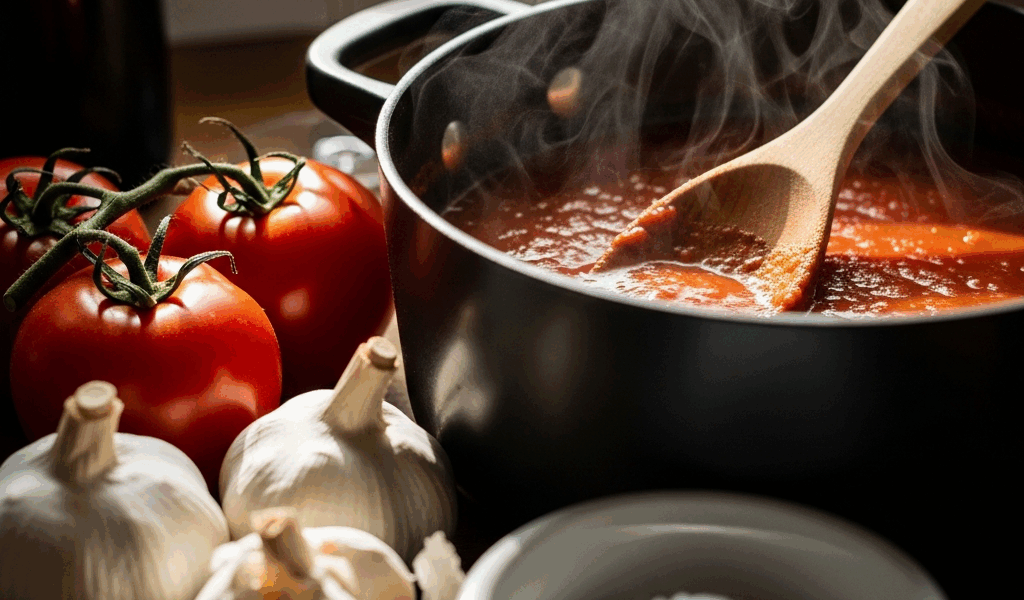
Why Your Tomato Sauce Tastes Off
Tomato sauce has gotten complicated with all the bland, acidic batches flying around. Standing there at the stove, staring into a pot of what was supposed to be silky marinara but tastes like tomato juice mixed with regret—that’s a specific kind of kitchen frustration. The issue isn’t you. It’s chemistry.
Tomatoes contain both natural sugars and citric acid. When you cook them down, the acid concentrates faster than the sweetness does. That’s why your sauce tastes sharp and one-dimensional. Fresh tomatoes, which have less developed flavor to begin with, are especially prone to this problem. Canned tomatoes are already cooked, so they’ve lost volatile aromatics that would normally round out the tartness. The good news? This is completely fixable mid-cook. You don’t need to start over.
Fix 1: Add Butter (Fastest)
Reaching for butter when your sauce tastes acidic seems counterintuitive. But fat is the fastest way to mask acid without changing the actual flavor profile. I use about 1 tablespoon per cup of sauce, added cold and stirred in off heat.
Here’s what happens: the fat molecules coat your palate and suppress your taste receptors’ sensitivity to acid. It’s not a chemical neutralization—it’s sensory suppression. Within 30 seconds of stirring, you’ll notice the sauce stops tasting harsh. That creamy mouthfeel? That’s the emulsion forming. Fat and water temporarily bonding. The sauce won’t stay this way forever (fat and water separate), but it buys you time to try other fixes. Takes 2 minutes total. Impact is immediate but temporary.
Fix 2: Simmer Longer (Best)
This is the actual solution, not a band-aid. Simmer your sauce uncovered for 10 to 20 minutes on low heat. The acid evaporates as steam. Simultaneously, the remaining water content reduces, which concentrates the tomatoes’ natural sugars and deepens every flavor note.
I learned this the hard way by trying every shortcut first. Slow reduction works because heat breaks down citric acid molecules through dehydration and oxidation, while the small amounts of natural fruit sugar in tomatoes become more prominent as the sauce concentrates. You’re not adding anything. You’re removing the thing making it taste bad. By minute 15, you’ll notice the color shifts from bright red to deeper burgundy. The flavor turns savory and round. This takes longer but requires zero additional ingredients and produces the best result.
Fix 3: Add Baking Soda (For Immediate Results)
Baking soda is the nuclear option. It works instantly but demands respect because you can easily overdo it.
Add 1/4 teaspoon at a time and watch the sauce bubble violently—that’s sodium bicarbonate neutralizing the acid through a genuine chemical reaction, producing carbon dioxide gas in the process. The pH rises immediately, and the sharp taste flattens out. Taste after each addition. One-quarter teaspoon usually does it for a pot serving four. If you add too much, your sauce tastes soapy and bitter. Which is worse than acidic.
The chemistry here is straightforward: NaHCO₃ plus acid equals CO₂ plus water plus salt. The problem is you’re also adding sodium, so this method works best if you’re already salting the sauce lightly. Use it when you’re in a time crunch and the sauce genuinely tastes aggressive. It fixes the problem in under a minute, but simmering longer produces a more refined result.
Fix 4-6: Add Sweetness, Cream, or Umami
These three fixes work differently depending on your sauce type and how much time you have.
Sugar (1 teaspoon to start): This masks acidity by overwhelming your taste buds with sweetness. I avoid it because it makes the sauce taste obviously sugary rather than naturally balanced. It’s a quick fix for canned tomato sauces where the acid is really aggressive, but fresh tomato sauces rarely need it. If you use it, dissolve it completely and taste before adding more.
Heavy cream (2 tablespoons per cup): Cream works similarly to butter in mechanism—fat suppresses acid perception—but it also adds richness and smoothness. The sauce becomes more luxurious. This works beautifully with canned tomatoes because cream adds body that fresh tomatoes already have. Stir it in off heat to prevent curdling. The result is silky and balanced. Takes 3 minutes.
Parmesan (2 tablespoons grated, per cup): This is my preferred fix when I have 15 minutes. Umami flavors from glutamates distract your palate from acidity while adding savory depth. Parmesan dissolves into the sauce and enriches it without making it taste cheesy—if you’re careful with quantity. Stir constantly to avoid clumping. The acid taste doesn’t disappear, but it becomes less noticeable because your brain is now focused on the savory complexity.
For canned tomato sauces, I rank them this way: cream, then Parmesan, then sugar. For fresh tomato sauces, Parmesan alone works best. Cream can muddy the delicate flavor of summer tomatoes.
Next Time: Build Flavor in Advance
Probably should have opened with this section, honestly. Prevention eliminates the problem entirely.
Toast your tomato paste first. If you’re using paste—2 tablespoons—heat it in the pan with olive oil for 2 minutes before adding anything else. This caramelizes the sugars and deepens the color from bright red to rust-brown. The resulting sauce tastes richer and less acidic from the start.
Sauté your aromatics longer. Most recipes say 3 minutes for onions and garlic. I go 5 to 7 minutes on medium heat until the onions turn translucent and slightly golden. This develops sulfur compounds that add savory backbone and mask acidity naturally. It’s not rushing. It’s intentional flavor building.
Use San Marzano tomatoes if possible. They cost slightly more—$1.50 to $2.50 per can versus $0.80 for standard canned—but have lower acidity by design. They’re sweeter from the start. If you hate canned tomato sauce, try San Marzano once. You’ll notice the difference immediately. Less sharpness, more natural sweetness. They’re worth the upcharge for weekend pasta night.
Building flavor in advance isn’t complicated. It’s just intention. Toast paste. Sauté aromatics slowly. Choose better tomatoes. The acid problem becomes minimal before you even add the tomatoes.
The next time your sauce tastes thin and sour, you now have six fixes ranked by speed. Butter for immediate relief. Simmering for the best result. Baking soda if you’re in a hurry. Cream if you want richness. Parmesan if you want savory depth. Sugar only if nothing else works. And for next time, start with better ingredients and take five extra minutes to build flavor at the beginning. That’s how the sauce stops tasting like a problem and starts tasting like dinner.



Stay in the loop
Get the latest home cuisine delights updates delivered to your inbox.