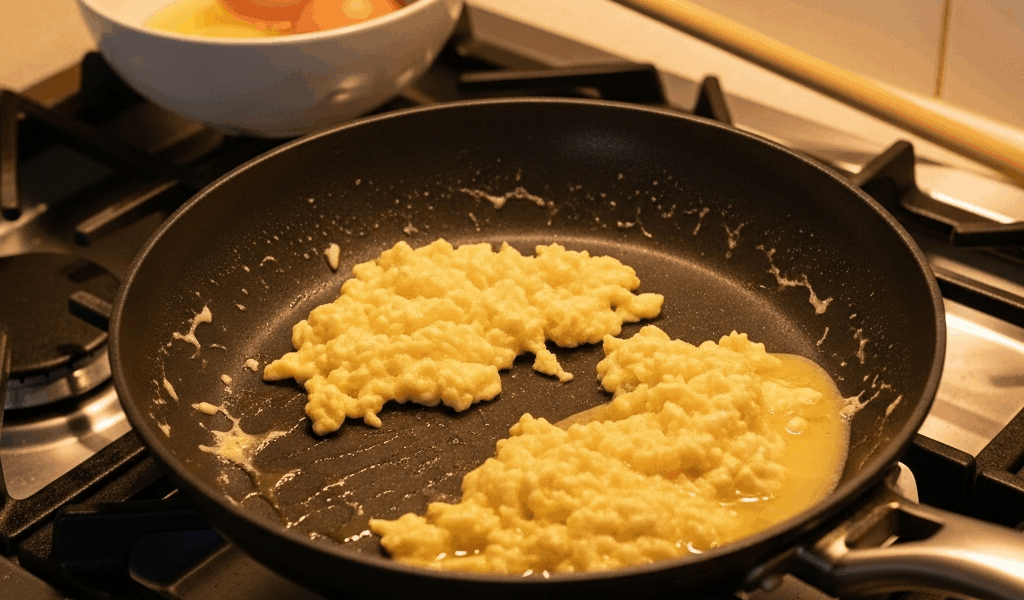
Why Your Scrambled Eggs Turn Out Rubbery and Overcooked
I’ve made scrambled eggs probably three thousand times. Not an exaggeration. For years, mine came out rubbery. Disappointing. The kind of texture that makes you scrape them off the plate and order delivery instead. Then I realized the problem wasn’t some mysterious cooking secret—it was four fixable mistakes I was making simultaneously.
Scrambled eggs turn rubbery and overcooked almost always because of one of these issues: heat that’s too high, cooking time that stretches too long, eggs that start too cold, or insufficient fat in the pan. But here’s what makes this endearing to us breakfast enthusiasts—the good news? You can diagnose which one is sabotaging your breakfast and fix it today. Right now, actually.
The Heat Is Almost Always the Culprit
I learned this the hard way at 6:47 AM on a Tuesday.
High heat causes egg proteins to contract violently and squeeze out moisture like a clenched fist. That’s the rubbery texture you’re tasting. Those tight, dense curds? That’s what happens when you’ve essentially shock-cooked the proteins.
But what is protein denaturation? In essence, it’s when heat unravels the coiled protein molecules and bonds them together. But it’s much more than that—it’s the fundamental reason your breakfast tastes like a rubber ball.
Eggs are roughly 13% protein by weight. On medium-high or high heat, that protein denatures so aggressively and so fast that the molecules pack tightly together, trapping moisture inside. When they finally cool, you’re left with something you could bounce off a plate. Medium heat gives you a three-to-five minute cooking window. Medium-low gives you five-to-eight minutes. That slower heat lets proteins unwind and set at a gentler pace, creating a curd structure that’s open enough to hold onto moisture.
The “when to know” moment arrives within the first 30 seconds. Listen. Really listen. On high heat, you’ll hear immediate sizzling and hissing. Curds form in visible clusters within 45 seconds. On medium or medium-low, the initial sound is quieter—more of a gentle bubbling. Curds form gradually, small and creamy, over two to three minutes.
Your nose also tells you immediately. High heat produces a sharper, slightly burnt smell. Medium heat smells buttery and mild.
Start your next batch on medium. Set a timer for four minutes before you even crack an egg. You’ll notice the difference in the first 60 seconds.
You’re Cooking Them Too Long Without Stirring Off the Heat
This is the mistake that probably should have opened this article, honestly.
Residual heat continues cooking your eggs even after you remove the pan from the burner. Even after you turn off the burner. The metal is hot. The eggs are still sitting in it, still denaturing, still losing moisture.
The “remove 30 seconds before done” rule exists because of carry-over cooking. When you pull the pan away at that 30-second window, the residual heat in the pan and eggs themselves will finish the job in the next 10-15 seconds while you’re stirring on the counter or buttering toast.
Why does this happen? Metal is an excellent conductor of heat. A stainless steel or non-stick pan at medium heat reaches roughly 300-350°F. When you remove the heat source, the pan doesn’t instantly drop to room temperature—it stays hot for another two to three minutes, actively transferring that heat into whatever’s inside it.
The fix is mechanical, not theoretical. When the curds look 80% set and you can see visible liquid egg still pooling in places, remove the pan from the heat. Stir continuously for 15-20 seconds off the heat. Watch as the residual heat finishes setting the eggs. Stop stirring when the texture matches what you want. Done.
I used to cook my scrambled eggs until they looked completely set in the pan. That was 2008. They’d sit another 30 seconds while I transferred them to a plate, and by the time I ate them, they had the texture of a kitchen sponge. Don’t make my mistake.
Your Eggs Are Too Cold When They Hit the Pan
Cold eggs create a temperature shock in a hot pan.
You pull eggs straight from the refrigerator at 35-40°F and pour them into a pan at 300°F. That 260-degree temperature gradient causes the outer surface of the egg to set almost instantly while the interior is still liquid. You end up with an uneven cook—overcooked edges, undercooked center—and you compensate by cooking longer, which makes everything turn rubbery.
The solution is stupidly simple: let your eggs sit on the counter for five minutes before cooking. Room-temperature eggs (68-72°F) reduce the temperature shock dramatically. Even better, warm them gently by cracking them into a bowl and letting the bowl sit in warm water for three minutes — at least if you want creamy curds instead of dense ones.
This synergizes with heat control. When your eggs are already at room temperature, medium heat works faster and more evenly. You’re not fighting a lag time where cold eggs take forever to set.
You’re Not Using Enough Fat
Insufficient butter or oil forces direct egg-to-metal contact. That’s where sticking happens. That’s where overcooking happens in concentrated spots.
The minimum ratio is one tablespoon of butter per two eggs. I use two tablespoons per two eggs because I apparently prefer richer scrambled eggs and because that extra fat creates a buffer zone between the egg proteins and the hot pan surface. Butter works for me while olive oil never quite does.
When the fat is adequate, the eggs basically float. They slide around. They cook evenly. When the fat is sparse, certain curds press directly against the pan and overcook while others sit in the cooler center of the pan.
Use a full 30 seconds to let the butter or oil get foamy before adding eggs. If you’re using olive oil, warm it until it shimmers. Then pour in eggs that are at room temperature.
How to Rescue Scrambled Eggs Mid-Cook
You’re three minutes in. The curds are forming too fast. They’re already starting to look dense. You realize you made a mistake.
You still have a recovery window.
Move the pan off the heat immediately. This stops the active cooking. Then do one of these three things:
- Add a tablespoon of cold butter or cream. Stir vigorously for 10 seconds. The cold fat drops the temperature and creates new moisture in the mixture.
- Remove half the eggs to a plate. Reduce the residual cooking by splitting the mass.
- Add a splash of whole milk or light cream. Two tablespoons maximum. Stir and let sit off-heat for 15 seconds.
The recovery window is about 30 seconds. After that, the damage is set. But if you catch it while there’s still visible liquid egg in the pan, you can absolutely save it.
Start paying attention to these four variables at your next breakfast. Heat level. Timing relative to carry-over cooking. Egg temperature before they hit the pan. Fat quantity. One of them is causing your rubbery eggs. Fix that one thing, and everything changes.



Stay in the loop
Get the latest home cuisine delights updates delivered to your inbox.